328
SECTION 5
MAINTENANCE
Maintenance
- Maintenance requirements . . . . . . . . . . . . . . . . . . . . . . . . . . . . . . . . . . . . . . . . . . . . . . . . . . . . . . . . . . . . . . . . . . . . . . . . . . . . . . . . . . . . . . . . . . . . . . . . . . . . . . . . . . . . . . . . . . . . . . . . . . . . . . . . . . . . . . . . . . . . . . . . . . . . . . . . . . . . . . . . . . . . . . . . . . . . . . . . . . . . . . . . . . . . . . . . . . . . . . . . . . . . . . . . . . . . . . . . . . . . ........ 329
- General maintenance . . . . . . . . . . . . . . . . . . . . . . . . . . . . . . . . . . . . . . . . . . . . . . . . . . . . . . . . . . . . . . . . . . . . . . . . . . . . . . . . . . . . . . . . . . . . . . . . . . . . . . . . . . . . . . . . . . . . ........ 330
- Does your vehicle need repairing? . . . . . . . . . . . . . . . . . . . . . . . . . . . . . . . . . . . . . . . . . . . . . . . . . . . . . . . . . . . . . . . . . . . . . . . . . . . . . . . . . . . . . . . . . . . . . . . . . . . . . . . . . . . . ........

MAINTENANCE
MAINTENANCE REQUIREMENTS
Your Lexus vehicle has been designed to have fewer maintenance requirements with longer service intervals to save both your time and money. However, each regular maintenance as well as day-to-day care is more important than ever before to ensure smooth, trouble-free, safe, and economical driving.
It is the owner’s responsibility to make sure the specified maintenance, including general maintenance services, is performed. Note that both the new vehicle and emission control system warranties specify that proper maintenance and care must be performed. See “Owner’s Guide”, “Owner’s Manual Supplement” or “Warranty Booklet” for complete warranty information.
General maintenance
General maintenance items are those day-to-day care practices that are important to your vehicle for proper operation. It is the owner’s responsibility to ensure that the general maintenance items are performed regularly.
These checks or inspections can be done either by yourself or your Lexus dealer.
Scheduled maintenance
The scheduled maintenance items listed in the “Owner’s Manual Supplement / Scheduled Maintenance” are those required to be serviced at regular intervals.
For details of your maintenance schedule, read the “Owner’s Manual Supplement / Scheduled Maintenance”.
It is recommended that only genuine Lexus parts be used for maintenance or for the repair of the emission control system.
The owner may elect to use non-Lexus supplied parts for replacement purposes without invalidating the emission control system warranty. However, use of replacement parts which are not of equivalent quality may impair the effectiveness of the emission control systems.
You may also elect to have maintenance, replacement, or repair of the emission control devices and system performed by any automotive repair establishment or individual without invalidating this warranty. See “Owner’s Guide”, “Owner’s Manual Supplement” or “Warranty Booklet” for complete warranty information.
Where to go for service?
Lexus technicians are well-trained specialists and are kept up to date with the latest service information through technical bulletins, service tips, and in-dealership training programs. They are well informed about the operation of all the systems on your vehicle.
You can be confident that your Lexus dealer’s service department performs the best job to meet the maintenance requirements of your vehicle – reliably and economically.
329
MAINTENANCE
Your copy of the repair order is proof that all required maintenance has been performed for warranty coverage. If any problems should arise with your vehicle while under warranty, your Lexus dealer will promptly take care of it. Again, be sure to keep a copy of the repair order for any service performed on your Lexus.
What about do-it-yourself maintenance?
Many of the maintenance items are easy to do yourself, if you have a little mechanical ability and a few basic automotive tools. Simple instructions for how to perform them are presented in Section 6.
If you are a skilled do-it-yourself mechanic, the Lexus service manuals are recommended. Please be aware that do-it-yourself maintenance can affect your warranty coverage. See your "Owner's Guide", "Owner's Manual Supplement" or "Warranty Booklet" for the details.
330
GENERAL MAINTENANCE
Listed below are the general maintenance items that should be performed at the intervals specified. It is recommended that any problem you notice be brought to the attention of your Lexus dealer or qualified service shop for their advice.
CAUTION Make these checks only with adequate ventilation if you run the engine.
Vehicle exterior
Items listed below should be performed from time to time, unless otherwise specified.
Tire pressure
Check the pressure with a gauge every two weeks, or at least once a month and adjust as shown on the tire pressure label. See page 365 for additional information.
Tire surface
Check the tires carefully for cuts, damage or excessive wear. See page 367 for additional information.
Wheel nuts
When checking the tires, make sure to check the nuts for looseness. Tighten them if necessary.
MAINTENANCE
Tire rotation Rotate the tires according to the maintenance schedule. (For scheduled maintenance information, please refer to the “Owner’s Manual Supplement / Scheduled Maintenance”. ) See page 367 for additional information.
Fluid leaks Check underneath for leaking fuel, oil, water or other fluid after the vehicle has been parked for a while. If you smell fuel fumes or notice any leak, have the cause found and corrected immediately.
Doors and engine hood Check that all doors and back door, operate smoothly and all latches lock securely. Make sure the engine hood secondary latch secures the hood when the primary latch is released.
Vehicle interior Items listed below should be checked regularly, e.g. while performing periodic services, cleaning the vehicle, etc.
Lights Make sure the headlights, stop lights, tail lights, turn signal lights, and other lights are working. Check headlight aim.
Service reminder indicators and warning buzzers Check that all service reminder indicators and warning buzzers function properly.
Steering wheel Check that it has the specified free play. Be alert for changes in steering condition, such as hard steering, excessive free play or strange noise.
Seats Check that all front seat controls such as seat adjusters, seatback recliner, etc. operate smoothly. Check that the head restraints move up and down smoothly and that the locks hold securely in any latched position. For folding-down rear seatbacks, swing-up rear seat cushions and detachable third seats, check that the latches lock securely.
Seat belts Check that the seat belt system such as buckles, retractors and anchors operate properly and smoothly. Make sure the belt webbing is not cut, frayed, worn or damaged.
Accelerator pedal Check the pedal for smooth operation and uneven pedal effort or catching.
Brake pedal Check the pedal for smooth operation and the proper clearance and free play. Check the brake booster function.
Brakes At a safe place, check that the brakes do not pull to one side when applied.
331
MAINTENANCE
Parking brake
Check that the lever has the proper travel and that, on a safe incline, your vehicle is held securely with only the parking brake applied.
Automatic transmission "Park" mechanism
Check the lock release button of the selector lever for proper and smooth operation. On a safe incline, check that your vehicle is held securely with the selector lever in "P" position and all brakes released.
Engine compartment
Items listed below should be checked from time to time, e.g. each time when refueling.
Washer fluid
Make sure there is sufficient fluid in the tank. See page 386 for additional information.
Engine coolant level
Make sure the coolant level is between the Upper and Lower lines on the see-through reservoir when the engine is cold. See page 354 for additional information.
Radiator, condenser and hoses
Check that the front of the radiator and condenser are clean and not blocked with leaves, dirt, or insects. See page 356 for additional information.
Battery
Your Lexus has a maintenance free battery. You do not have to add distilled water. For longer life of the battery, however, see page 379 for additional information.
332
MAINTENANCE
Brake fluid level Make sure the brake fluid level is correct. See page 362 for additional information.
Engine oil level Check the level on the dipstick with the engine turned off and the vehicle parked on a level spot. See page 351 for additional information.
Suspension fluid level Make sure the suspension fluid level is correct. See page 364 for additional information.
Power steering fluid level Check the level through the reservoir. The level should be in the "HOT" or "COLD" range depending on the fluid temperature. See page 363 for additional information.
Exhaust system If you notice any change in the sound of the exhaust or smell exhaust fumes, have the cause located and corrected immediately. (See “Engine exhaust caution” on page 230.)
DOES YOUR VEHICLE NEED REPAIRING?
Be on the alert for changes in performance and sounds, and visual tip-offs that indicate service is needed. Some important clues are:
- Engine missing, stumbling, or pinging
- Appreciable loss of power
- Strange engine noises
- A fluid leak under the vehicle (However, water dripping from the air conditioning after use is normal.)
- Change in exhaust sound (This may indicate a dangerous carbon monoxide leak. Drive with the windows open and have the exhaust system checked immediately.)
- Flat-looking tires, excessive tire squeal when cornering, uneven tire wear
- Vehicle pulls to one side when driving straight on a level road
- Strange noises related to suspension movement
- Loss of brake effectiveness, spongy feeling brake pedal, pedal almost touches floors, vehicle pulls to one side when braking
- Engine coolant temperature continually higher than normal
- Engine continually runs hot; oil pressure gauge stays low.
333
MAINTENANCE
If you notice any of these clues, take your vehicle to your Lexus dealer as soon as possible. It probably needs adjustment or repair.
CAUTION Do not continue driving with the vehicle unchecked. It could result in serious vehicle damage and possibly personal injury.
EMISSION INSPECTION AND MAINTENANCE (I/M) PROGRAMS
Some states have vehicle emission inspection programs which include OBD (On-Board Diagnostics) checks.
The OBD system monitors the operation of the emission control system. When the OBD system determines that a problem exists somewhere in the emission control system, the malfunction indicator lamp comes on. In this case, your vehicle may not pass the I/M test and need to be repaired. Contact your Lexus dealer to service the vehicle.
Even if the malfunction indicator lamp does not come on, your vehicle may not pass the I/M test as readiness codes have not been set in the OBD system.
Readiness codes are automatically set during ordinary driving. However, when the battery is disconnected or run down, the codes are erased. Also, depending on your driving habits, the codes may not be completely set.
Also, if the malfunction indicator lamp had come on recently due to temporary malfunction such as a loose fuel tank cap, your vehicle may not pass the I/M test.
The malfunction indicator lamp will go off after taking several driving trips, but the error code in the OBD system will not be cleared unless about 40 trips or more are taken.
If your vehicle does not pass the I/M test and the malfunction indicator lamp does not come on, contact your Lexus dealer to prepare the vehicle for re-testing.
334
335
336
SECTION 6 – 1
SERVICE PROCEDURES AND SPECIFICATIONS
Introduction
- Vehicle identification . . . . . . . . . . . . . . . . . . . . . . . . . . . . . . . . . . . . . . . . . . . . . . . . . . . . . . . . . . . . . . . . . . . . . . . . . . . . . . . . . . . . . . . . . . . . . . . . . . . . . . . . . . . . . . . . . . . . . . . . . . . . . . . . . . . . . . . . . . . . . . . . . . . . . . . . . . . . . . . . . . . . . . . . . . . . . . . . . . . . . . . . . . . . . . . . . . . . . . . . . . . . ........ 337
- Engine compartment overview . . . . . . . . . . . . . . . . . . . . . . . . . . . . . . . . . . . . . . . . . . . . . . . . . . . . . . . . . . . . . . . . . . . . . . . . . . . . . . . . . . . . . . . . . . . . . . . . . . . . . . . . . . . . . . . . ........ 338
- Do-it-yourself service precautions . . . . . . . . . . . . . . . . . . . . . . . . . . . . . . . . . . . . . . . . . . . . . . . . . . . . . . . . . . . . . . . . . . . . . . . . . . . . . . . . . . . . . . . . . . . . . . . . . . . . . . . . . . . . ........

INTRODUCTION
VEHICLE IDENTIFICATION
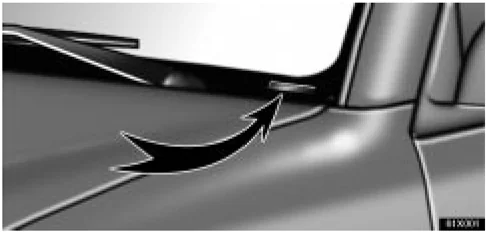
The vehicle identification number (VIN) is the legal identifier for your vehicle. This number is on the left top of the instrument panel and can be seen through the windshield from outside.
This is the primary identification number for your Lexus. It is used in registering the ownership of your vehicle.
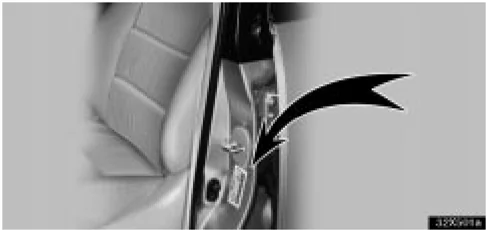
The vehicle identification number (VIN) is also on the Certification Label.
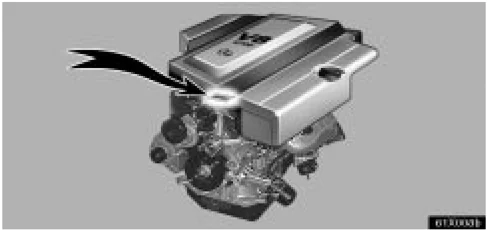
The engine number is stamped on the engine block as shown.
337
INTRODUCTION
ENGINE COMPARTMENT OVERVIEW
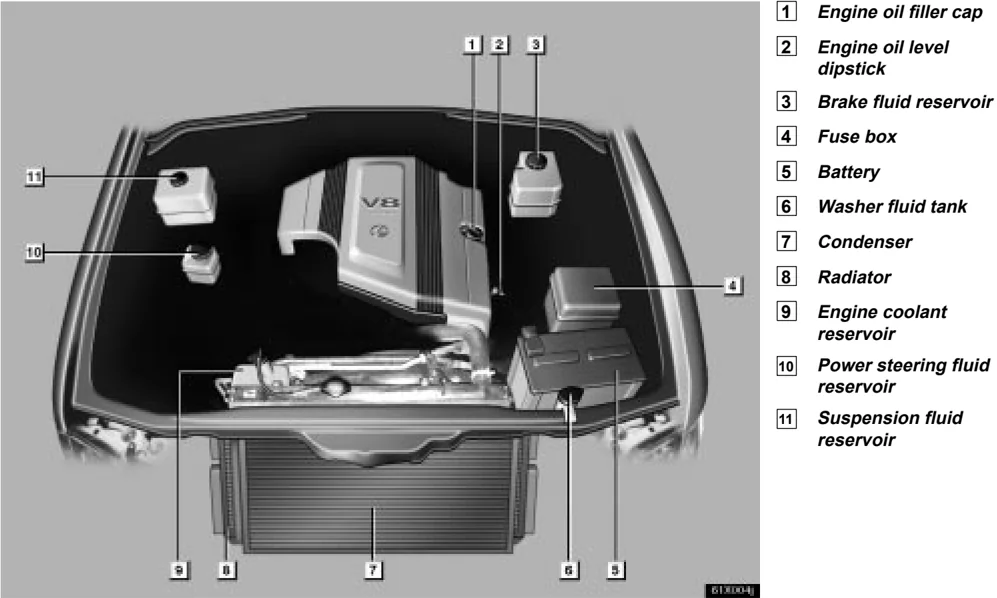
1 Engine oil filler cap 2 Engine oil level dipstick 3 Brake fluid reservoir 4 Fuse box 5 Battery 6 Washer fluid tank 7 Condenser 8 Radiator 9 Engine coolant reservoir 10 Power steering fluid reservoir 11 Suspension fluid reservoir
338
INTRODUCTION
DO-IT-YOURSELF SERVICE PRECAUTIONS
If you perform maintenance yourself, be sure to follow the correct procedure given in this Section.
You should be aware that improper or incomplete servicing may result in operating problems.
Performing do-it-yourself maintenance during the warranty period may affect your warranty coverage. Read the separate Lexus Warranty statement for details and suggestions.
This Section gives instructions only for those items that are relatively easy for an owner to perform. As explained in Section 5, there are still a number of items that must be performed by a qualified technician with special tools.
For information on tools and parts for do-it-yourself maintenance, see "Parts and tools" on page 340.
Utmost care should be taken when working on your vehicle to prevent accidental injury. Here are a few precautions that you should be especially careful to observe:
CAUTION
- When the engine is running, keep hands, clothing, and tools away from the moving fan and engine drive belt. (Removing rings, watches, and ties is advisable.)
- Right after driving, the engine compartment – the engine, radiator, exhaust manifold and power steering fluid reservoir and spark plug boots, etc. – will be hot. So be careful not to touch them. Oil, other fluids and spark plugs may also be hot.
- If the engine is hot, do not remove the radiator cap or loosen the drain plugs to prevent burning yourself.
- Do not smoke, cause sparks or allow open flames around fuel or the battery. Their fumes are flammable.
- Do not get under your vehicle with just the body jack supporting it. Always use automotive jack stands or other solid supports.
- Use eye protection whenever you work on or under your vehicle where you may be exposed to flying or falling material, fluid spray, etc.
- Be extremely cautious when working on the battery. It contains poisonous and corrosive sulfuric acid.
- Warning: Battery posts, terminals and related accessories contain lead and lead compounds, chemicals known to the State of California to cause cancer and reproductive harm. Wash hands after handling.
339
INTRODUCTION
NOTICE
- Remember that battery and ignition cables carry high currents or voltages. Be careful of accidentally causing a short circuit.
- Before closing the engine hood, check to see that you have not forgotten any tools, rags, etc.
- Do not drive with the air cleaner removed, or excessive engine wear could result. Also backfiring could cause a fire in the engine compartment.
- Do not overfill automatic transmission fluid, transfer oil and power steering fluid, or the transmission, transfer and power steering could be damaged.
- Be careful not to scratch the glass surface with the wiper frame.
PARTS AND TOOLS
Here is a list of parts and tools you will need to perform do-it-yourself maintenance. Remember all Lexus parts are designed in metric sizes, so your tools must be metric.
Checking the engine oil level
Parts (if level is low):
- "Toyota Genuine Motor Oil" or equivalent Oil grade: API grade SL "Energy-Conserving" or ILSAC multigrade engine oil. For recommended oil viscosity, see page 352.
Tools:
- Rag or paper towel
- Funnel (only for adding oil)
Checking the engine coolant level
Parts (if level is low):
- "Toyota Genuine Long Life Coolant" or equivalent See "Checking the engine coolant level" on page 354 for instructions.
- Demineralized or distilled water
Tools:
- Funnel (only for adding coolant)
340
INTRODUCTION
Checking brake fluid Parts (if level is low): • FMVSS No. 116 DOT 3 or SAE J1703 brake fluid Tools: • Rag or paper towel • Funnel (only for adding fluid)
Checking power steering fluid Parts (if level is low): • Automatic transmission fluid DEXRON®II or III Tools: • Rag or paper towel • Funnel (only for adding fluid)
Checking suspension fluid AHC Parts (if level is low): • Suspension fluid AHC Tools: • Rag or paper towel • Funnel (only for adding fluid)
Checking battery condition Tools: • Warm water • Baking soda • Grease • Conventional wrench (for terminal clamp bolts)
Checking and replacing the blade type fuses Parts (if replacement is necessary): • Fuse with same amperage rating as original
Checking the cartridge type fuses Parts (if replacement is necessary): • Genuine Lexus fuse or equivalent with same amperage rating as original
Adding washer fluid Parts: • Water • Washer fluid containing antifreeze (for winter use) Tools: • Funnel
341
342
SECTION 6–2
SERVICE PROCEDURES AND SPECIFICATIONS
Engine
- Specifications . . . . . . . . . . . . . . . . . . . . . . . . . . . . . . . . . . . . . . . . . . . . . . . . . . . . . . . . . . . . . . . . . . . . . . . . . . . . . . . . . . . . . . . . . . . . . . . . . . . . . . . . . . . . . . . . . . . . . . . . . . . . . . . . . . . . . . . . . . . . . . . . . . . . . . . . . . . . . . . . . . . . . . . . . . . . . . . . . . . . . . . . . . . . . . . . . . . . . . . . . . . . . . . . . . . . . . . . ........ 343
- Fuel . . . . . . . . . . . . . . . . . . . . . . . . . . . . . . . . . . . . . . . . . . . . . . . . . . . . . . . . . . . . . . . . . . . . . . . . . . . . . . . . . . . . . . . . . . . . . . . . . . . . . . . . . . . . . . . . . . . . . . . . . . . ........ 346
- Fuel pump shut off system . . . . . . . . . . . . . . . . . . . . . . . . . . . . . . . . . . . . . . . . . . . . . . . . . . . . . . . . . . . . . . . . . . . . . . . . . . . . . . . . . . . . . . . . . . . . . . . . . . . . . . . . . . . . . . . . ........

SPECIFICATIONS
– GENERAL
| Model | 2UZ–FE |
|---|---|
| Type | 8 cylinder V type, 4 cycle, gasoline |
| Bore and stroke | 94.0 X 84.0 mm (3.70 X 3.30 in.) |
| Displacement | 4664 cm³ (284.6 cu.in.) |
| Valve clearance (engine cold) | |
| Intake | 0.15 – 0.25 mm (0.006 – 0.010 in.) |
| Exhaust | 0.25 – 0.35 mm (0.010 – 0.014 in.) |
| Drive belt tension | Automatic adjustment |
– FUEL
| Fuel type | Only UNLEADED |
|---|---|
| Octane rating | 87 (Research octane number 91) or higher |
ENGINE
– LUBRICATION SYSTEM
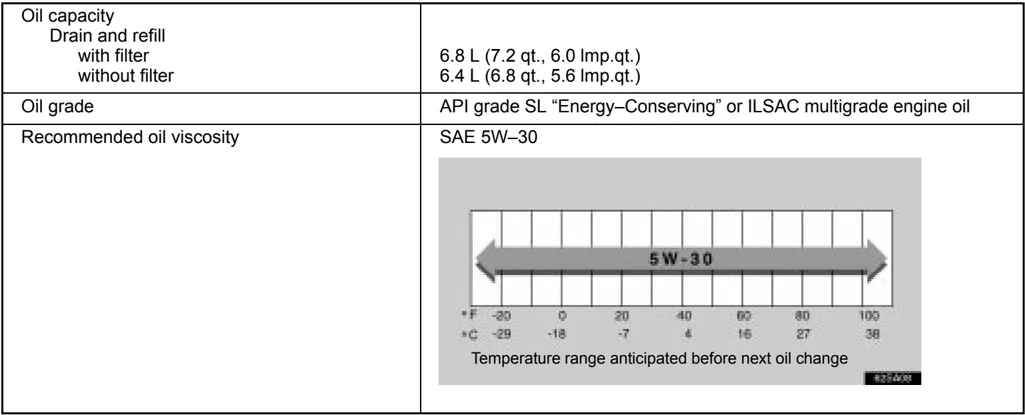
| Oil capacityDrain and refillwith filterwithout filter | 6.8 L (7.2 qt., 6.0 Imp.qt.)6.4 L (6.8 qt., 5.6 Imp.qt.) |
|---|---|
| Oil grade | API grade SL “Energy–Conserving” or ILSAC multigrade engine oil |
| Recommended oil viscosity | SAE 5W–30 |
NOTE:
“Toyota Genuine Motor Oil” is filled in your Lexus vehicle. Use Lexus approved “Toyota Genuine Motor Oil” or equivalent to satisfy the above grade and viscosity. Please contact your Lexus dealer for further details.
344
ENGINE
– COOLING SYSTEM
| Capacity | 15.4 L (16.3 qt., 13.6 Imp.qt.) |
|---|---|
| Coolant type | “Toyota Genuine Long Life Coolant” or equivalentWith ethylene–glycol type coolant for a proper corrosion protection of aluminum componentsDo not use alcohol type antifreeze or plain water alone. |
NOTE:
“Toyota Genuine Long Life Coolant” is filled in your Lexus vehicle. In order to avoid technical problems, we strongly recommend using “Toyota Genuine Long Life Coolant” or equivalent. Please contact your Lexus dealer for further details.
– IGNITION SYSTEM
| Spark plug – Make | DENSONGK | SK20R11IFR6A11 |
|---|---|---|
| – Gap | 1.1 mm (0.043 in.) |
– ELECTRICAL SYSTEM
| Battery – Open voltage at 20°C (68°F): | 12.6 – 12.8 V12.2 – 12.4 V11.8 – 12.0 V[Voltage that is checked 20 minutes after the key is removed with all the lights turned off] | Fully chargedHalf chargedDischarged |
|---|---|---|
| – Charging rates | 5A max. |
345
ENGINE
FUEL
Fuel type
Your vehicle must use only unleaded gasoline.
To help prevent gas station mixups, your Lexus has a smaller fuel tank opening. The special nozzle on pumps with unleaded fuel will fit it, but the larger standard nozzle on pumps with leaded gas will not.
At a minimum, the gasoline you use should meet the specifications of ASTM D4814 in the U.S.A. and CGSB 3.5–M93 in Canada.
NOTICE Do not use leaded gasoline. Use of leaded gasoline will cause the three-way catalytic converter to lose its effectiveness and the emission control system to function improperly. Also, this can increase maintenance costs.
Octane rating
Select Octane Rating 87 (Research Octane Number 91) or higher. For improved vehicle performance, the use of premium unleaded gasoline with an Octane Rating of 91 (Research Octane Number 96) or higher is recommended.
Use of unleaded fuel with an octane number or rating lower than stated above will cause persistent heavy knocking. If severe, this will lead to engine damage.
If your engine knocks ...
If you detect heavy knocking even when using the recommended fuel, or if you hear steady knocking while holding a steady speed on level roads, consult your Lexus dealer.
However, occasionally, you may notice light knocking for a short time while accelerating or driving up hills. This is normal and there is no need for concern.
Gasoline containing detergent additives
Lexus recommends the use of gasoline that contains detergent additives to avoid build-up of engine deposits.
However, all gasoline sold in the U.S. contains detergent additives to keep clean and/or clean intake systems.
Quality gasoline
Automotive manufacturers in the U.S., Europe and Japan have developed a specification for quality fuel named World-Wide Fuel Charter (WWFC) that is expected to be applied world wide. The WWFC consists of three categories that depend on required emission levels. In the U.S., category 3 has been adopted. The WWFC improves air quality by providing for better emissions in vehicle fleets, and customer satisfaction through better vehicle performance.
346
ENGINE
Cleaner burning gasoline
Cleaner burning gasoline, including reformulated gasoline that contains oxygenates such as ethanol or MTBE is available in many areas.
Lexus recommends the use of cleaner burning gasoline and appropriately blended reformulated gasoline. These types of gasoline provide excellent vehicle performance, reduce vehicle emissions, and improve air quality.
Oxygenates in gasoline
Lexus allows the use of oxygenate blended gasoline where the oxygenate content is up to 10% ethanol or 15% MTBE. If you use gasohol in your Lexus, be sure that it has an octane rating no lower than 87.
Lexus does not recommend the use of gasoline containing methanol.
Gasoline containing MMT
Some gasoline contain an octane enhancing additive called MMT (Methylcyclopentadienyl Manganese Tricarbonyl).
Lexus does not recommend the use of gasoline that contains MMT. If fuel containing MMT is used, your emission control system may be adversely affected. The Malfunction Indicator Lamp on the instrument cluster may come on. If this happens, contact your Lexus dealer for service.
Gasoline quality
In a very few cases, you may experience driveability problems caused by the particular gasoline that you are using. If you continue to have unacceptable driveability, try changing gasoline brands. If this does not rectify your problem, then consult your Lexus dealer.
NOTICE
- Do not use gasohol other than stated above. It will cause fuel system damage or vehicle performance problems.
- If driveability problems are encountered (poor hot starting, vaporizing, engine knock, etc.), discontinue its use.
347
ENGINE
- Take care not to spill gasohol during refueling. Gasohol may cause paint damage.
Fuel tank capacity 96 L (25.4 gal., 21.1 Imp.gal.)
FUEL PUMP SHUT OFF SYSTEM
The fuel pump shut off system stops supplying fuel to the engine when the engine stalls or an airbag inflates upon collision. To restart the engine after the fuel pump shut off system activates, turn the ignition switch to “ACC” or “LOCK” once and start it.
⚠ CAUTION Inspect the ground under the vehicle before restarting the engine. If you find that liquid has leaked onto the ground, it is the fuel system that has been damaged and it is in need of repair. In this case, do not restart the engine.
348

ENGINE
FACTS ABOUT ENGINE OIL CONSUMPTION
Functions of engine oil
Engine oil has the primary function of lubricating and cooling the inside of the engine, and plays a major role in maintaining the engine in proper working order.
Engine oil consumption
It is normal that an engine should consume some engine oil during normal engine operation. The causes of oil consumption in a normal engine are as follows.
- Oil is used to lubricate pistons, piston rings and cylinders. A thin film of oil is left on the cylinder wall when a piston moves downwards in the cylinder. High negative pressure generated when the vehicle is decelerating sucks some of this oil into the combustion chamber. This oil as well as some part of the oil film left on the cylinder wall is burned by the high temperature combustion gases during the combustion process.
- Oil is also used to lubricate the stems of the intake valves. Some of this oil is sucked into the combustion chamber together with the intake air and is burned along with the fuel. High temperature exhaust gases also burn the oil used to lubricate the exhaust valve stems.
The amount of engine oil consumed depends on the viscosity of the oil, the quality of the oil and the way the vehicle is driven.
More oil is consumed by high-speed driving and frequent acceleration and deceleration.
A new engine consumes more oil, since its pistons, piston rings and cylinder walls have not become conditioned.
Oil consumption: Max. 1.0 L per 1000 km (1.1 qt./600 miles, 0.9 Imp.qt./600 miles)
When judging the amount of oil consumption, keep in mind that the oil may have become diluted, making it difficult to judge the true level accurately.
For example, if a vehicle is used for repeated short trips and consumes a normal amount of oil, the dipstick may not show any drop in the oil level at all, even after 1000 km (600 miles) or more. This is because the oil is gradually becoming diluted with fuel or moisture, making it appear that the oil level has not changed.
The diluting ingredients evaporate out when the vehicle is then driven at high speeds, as on an expressway, making it appear that oil is excessively consumed after driving at high speeds.
349
ENGINE
Importance of engine oil level check
One of the most important points in proper vehicle maintenance is to keep the engine oil at the optimum level so that oil function will not be impaired. Therefore, it is essential that the oil level be checked regularly. Lexus recommends that the oil level be checked every time you refuel the vehicle.
NOTICE Failure to check the oil level regularly could lead to serious engine trouble due to insufficient oil.
For detailed information on oil level check, see "Checking the engine oil level" described below.
USED ENGINE OIL
CAUTION
- Used engine oil contains potentially harmful contaminants which may cause skin disorders such as inflammation or skin cancer, so care should be taken to avoid prolonged and repeated contact with it. To remove used engine oil from your skin, wash thoroughly with soap and water.
- Dispose of used oil and used oil filters only in a safe and acceptable manner. Do not dispose of used oil and used oil filters in household trash, in sewers or onto the ground. Call your Lexus dealer or a service station for information concerning recycling or disposal.
- Do not leave used oil within the reach of children.
350
ENGINE
CHECKING THE ENGINE OIL LEVEL
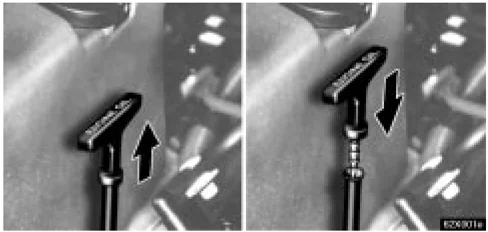
With the engine at operating temperature and turned off, check the oil level on the dipstick.
- To get a true reading, the vehicle should be on a level ground. After turning off the engine, wait a few minutes for the oil to drain back into the bottom of the engine.
- Pull the dipstick out, hold a rag under the end and wipe it clean.
- Standing up on the left side of the vehicle, reinsert the dipstick in the direction so that the "ENGINE OIL" on top should be read correctly and push it in as far as it will go, or the reading will not be correct.
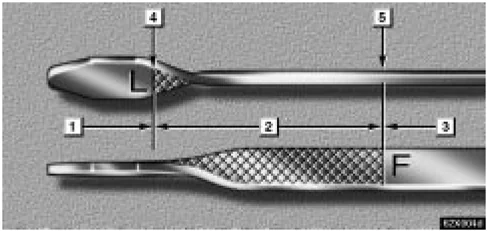
▶ 1 Add oil 2 O.K. 3 Too full
- Pull the dipstick out and look at the oil level while holding a rag under the end. If it is between the full line ( 5 ) and the low line ( 4 ), it is O.K.
NOTICE
Be careful not to drop the engine oil on the vehicle components.
351
ENGINE
 If the oil level is below or only slightly above the low line, add engine oil of the same type as already in the engine.
Remove the oil filler cap and add engine oil a little at a time, checking the dipstick. We recommend that you use a funnel when adding oil. The approximate quantity of oil needed to fill between the low line and the full line on the dipstick is indicated below for reference.
When the level reaches within the correct range, return the filler cap and turn the cap clockwise until you hear a click.
Oil quantity. L (qt., Imp. qt.) 1.5 (1.6, 1.3)
NOTICE
- Be careful not to spill the engine oil on the vehicle components.
- Avoid overfilling, or the engine could be damaged.
- Check the oil level on the dipstick once again after adding the oil.
Engine oil selection
"Toyota Genuine Motor Oil" is filled in your Lexus vehicle. Use Lexus approved "Toyota Genuine Motor Oil" or equivalent to satisfy the following grade and viscosity.
Oil grade: API grade SL "Energy-Conserving" or ILSAC multigrade engine oil.
Recommended viscosity: SAE 5W–30
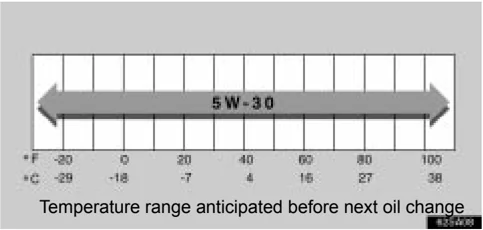
SAE 5W–30 is the best choice, for good fuel economy, and good starting in cold weather.
If SAE 5W–30 oil is not available, SAE 10W–30 oil may be used. However, it should be replaced with SAE 5W–30 at the next oil change.
352
ENGINE
Oil identification marks
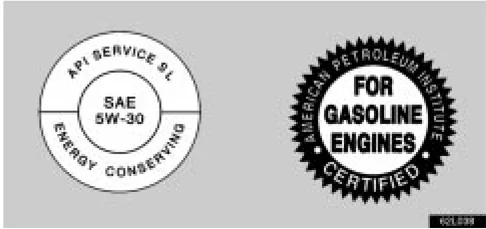
►API Service Symbol ►ILSAC Certification Mark
Either or both API registered marks are added to some oil containers to help you select the oil you should use.
- The API Service Symbol is located anywhere on the outside of the container.
The top portion of the label shows the oil quality by API (American Petroleum Institute) designation such as SL. The center portion of the label shows the SAE viscosity grade such as SAE 5W–30. "Energy–Conserving", shown in the lower portion, indicates that the oil has fuel–saving capabilities.
- The ILSAC (International Lubricant Standardization and Approval Committee) Certification Mark is displayed on the front of the container.
To ensure excellent lubrication performance for your engine, “Toyota Genuine Motor Oil” is available, which has been specifically tested and approved for all Lexus engines.
Please contact your Lexus dealer for further details about “Toyota Genuine Motor Oil”.
353
ENGINE
CHECKING THE ENGINE COOLANT LEVEL
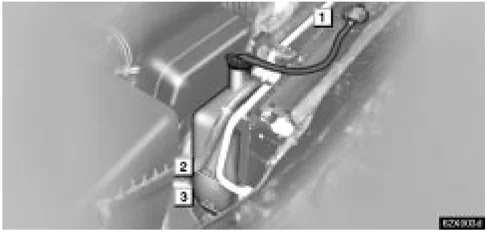
▶ 1 Radiator cap 2 Upper line 3 Lower line
Look at the see-through coolant reservoir when the engine is cold. The coolant level is satisfactory if it is between the "FULL" and "LOW" lines on the reservoir. If the level is low, add ethylene-glycol type coolant for a proper corrosion protection of aluminum components.
The coolant level in the reservoir will vary with engine temperature. However, if the level is on or below the "LOW" line, add coolant. Bring the level up to the "FULL" line.
Always use ethylene-glycol type coolant for a proper corrosion protection of aluminum components. See information in the next column.
If the coolant level drops within a short time after replenishing, there may be a leak in the system. Visually check the radiator, hoses, engine coolant filler cap, radiator cap and drain cock and water pump.
If you can find no leak, have your Lexus dealer test the radiator cap pressure and check for leaks in the cooling system.
⚠ CAUTION To prevent burning yourself, do not remove the radiator cap when the engine is hot.
354
ENGINE
Coolant type selection
Use of improper coolants may damage your engine cooling system. Your coolant must contain ethylene–glycol type coolant for proper corrosion protection of your engine that contains aluminum components. We have used “Toyota Genuine Long Life Coolant” in your Lexus vehicle. In order to avoid technical problems, we strongly recommend using “Toyota Genuine Long Life Coolant” or equivalent.
In addition to preventing freezing and subsequent damage to the engine, this type of coolant will also prevent corrosion. Further supplemental inhibitors or additives are neither needed nor recommended.
Read the coolant container for information on freeze protection. Follow the manufacturer’s directions for how much to mix with plain water (preferably demineralized water or distilled water). The total capacity of the cooling system is given on page 345.
We recommend a 50% solution for your Lexus, to provide protection down to about –35°C (–31°F). When it is extremely cold, to provide protection down to about –50°C (–58°F), a 60% solution is recommended. Do not use more than 70% solution for better coolant performance.
NOTICE Do not use alcohol type antifreeze or plain water alone.
The engine cooling system is integral to maximizing performance of your Lexus vehicle. In line with this, it is strongly recommended that you use “Toyota Genuine Long Life Coolant” for protecting the system, as it is an ethylene–glycol based premium antifreeze coolant with excellent corrosion protection properties that has been specifically formulated for use in Lexus vehicles.
Please contact your Lexus dealer for further details about “Toyota Genuine Long Life Coolant”.
355
ENGINE
CHECKING THE RADIATOR AND CONDENSER
If either of the above parts are extremely dirty or you are not sure of their condition, take your vehicle to a Lexus dealer.
CAUTION To prevent burning yourself, be careful not to touch the radiator or condenser when the engine is hot.
NOTICE To prevent damage to the radiator and condenser, do not perform the work by yourself.
SPARK PLUGS

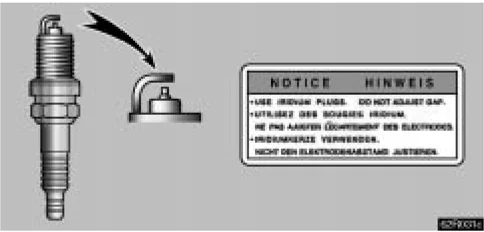
Your engine is fitted with iridium-tipped spark plugs.
NOTICE Use only iridium-tipped spark plugs and do not adjust gaps for your engine performance and smooth drivability.
356
357