STARTING AND DRIVING
CAUTION The "HI" (high) or "Extra high" mode should be used for severe off-road driving condition only. Because the vehicle's center of gravity is higher in this setting, the vehicle may become unstable when turning abruptly, resulting in an accident.
When the four-wheel drive control lever is put at "L", this mode may change to the extra high mode automatically in accordance with the driving condition.
When the vehicle exceeds the specified vehicle speed, the vehicle height changes to the following:
With the four-wheel drive control lever at "H" and at the vehicle speed of 30 km/h (19 mph) or over, the normal mode is automatically selected.
With the four-wheel drive control lever at "L" and at the vehicle speed of 50 km/h (30 mph) or over, the vehicle height becomes automatically about 25 mm (1.0 in.) higher than the normal mode height. If the vehicle speed is lowered about 20 km/h (12 mph) or less after that, the high mode automatically resumes.
Extra high mode
This mode is automatically selected from the high mode with the four-wheel drive control lever placed in "L" position depending on the vehicle driving condition.
If the vehicle becomes stuck, the vehicle height rises automatically to the extra high mode (slightly higher or at about 70 mm (2.8 in.) higher than normal mode height).
In the following cases, the extra high mode changes to the high mode automatically:
- When your vehicle is no longer stuck.
- When the four-wheel drive control lever is put in a position other than "L".
When you push the height select switch on the "▼" side in the extra high mode, the normal mode is selected.
Since the extra high mode is automatically selected, you cannot select this mode on purpose with the height select switch.
- "N" (normal) mode
The vehicle height in this mode is standard.
This mode is suitable for ordinary driving.
- "LO" (low) mode
The vehicle height is about 50 mm (2.0 in.) lower at front and about 40 mm (1.6 in.) lower at rear than the normal mode height.
This mode allows you easy access to the vehicle (getting in and out) and easy loading and unloading operation.
This mode is available when the vehicle is stopped. When you start the vehicle, the normal mode is automatically selected.
251
STARTING AND DRIVING
NOTICE
The normal mode is automatically selected when the vehicle begins to move in the low mode. So be careful when you drive in any place where the overhead height is limited.
(b) Automatic leveling function
Regardless of the number of occupants or the luggage loading condition, the vehicle height is always automatically adjusted to a fixed height in any mode.
However, the vehicle height cannot be raised if the vehicle load exceeds the limits. (See page 253.)
(c) Vehicle height mode changing condition
To change the vehicle height, it is necessary to meet the following 3 conditions.
- The engine should be running.
- All the side doors and back door should be closed.
- The height control "OFF" indicator light should go off.
When selecting a mode with the four-wheel drive control lever at "H", there is a vehicle speed limit. Refer to the following table.
○ = The mode can be selected.
× = The mode cannot be selected.
| Low mode | Normal mode | High mode | |
|---|---|---|---|
| At vehicle stoppage | ○ | ○ | ○ |
| Under about 30 km/h (19 mph) | × | ○ | ○ |
| About 30 km/h (19 mph) or over | × | ○ | × |
In the following cases the active height control suspension does not operate even if the above conditions are all met.
- The brake pedal has been depressed for longer than about 5 seconds with the vehicle stopped.
- The suspension fluid temperature is lower than –30°C (–22°F). If the engine is warmed up, the suspension fluid temperature will be raised as the inside of the engine compartment becomes warmer. Then the active height control suspension becomes operable.
- Driving on bumpy roads, which may cause the suspension to fully elongate.
- The steering wheel is operated abruptly more than 3/4 turn with center differential lock system activated.
252
STARTING AND DRIVING
(d) Vehicle height adjustment
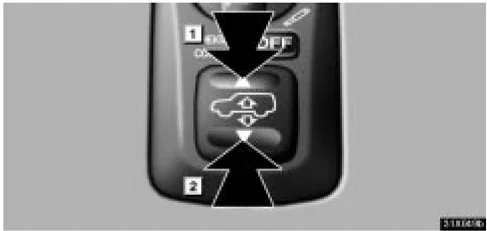
► 1 Higher 2 Lower
To change the mode, push the height select switch on either side of "▲" and "▼".
The height control indicator light indicates which mode is selected. (See page 255.)
NOTICE
-
If you change the vehicle height frequently, the pump may overheat. To prevent this, the active height control suspension should be stopped temporarily for a minute between selections. Operate it again.
-
Before you lower the vehicle height with the height select switch, check under the vehicle to make sure that nothing to damage the vehicle or no one to be injured is there and the underbody of the vehicle does not touch the ground.
-
After unloading, the height of a vehicle equipped with the active height control suspension becomes slightly higher than the normal vehicle height. Take sufficient care where the overhead height is restricted.
The vehicle height cannot be raised if the vehicle load exceeds the following limits:
- Up to 4 occupants* plus about 300 kg (661 lb.) in the normal mode
- Up to 4 occupants* plus about 170 kg (375 lb.) in the high mode
*About 68 kg (150 lb.) for a person
If the above load capacity is exceeded, the desired vehicle height may not be obtained even if the height select switch is pushed. (If the vehicle height cannot be raised in the normal mode and the height control indicator indicates "LO", this is because the vehicle is loaded too heavily. Under these conditions, drive your vehicle with due care.)
If the vehicle height cannot be raised even after unloading, push the height select switch on the "▼" side and then on the "▲" side. If this does not work, turn off the ignition once and then turn on. Operate the select switch again.
253
STARTING AND DRIVING
- Selecting the high mode: Push the height select switch on the "▲" side when the vehicle speed is under about 30 km/h (19 mph). To change the normal mode to high, push the switch once. To change the low mode to high, push the switch twice. It takes about 30 seconds until the low mode changes to the high mode.
- Selecting the normal mode: To change the high mode to normal, push the height select switch on the "▼" side once. To change the low mode to normal, push the height select switch on the "▲" side once.
- Selecting the low mode: Push the height select switch on the "▼" side while the vehicle is stopped. To change the high mode to low, push the switch twice. To change the normal mode to low, push the switch once.
NOTICE Do not select the low mode on bumpy roads. If the underbody of the vehicle touches the rugged road surface, the vehicle may be damaged.
Even if the engine is stopped while the vehicle height is being lowered, the operation continues for up to 12 seconds.
(e) Turning off the active height control suspension
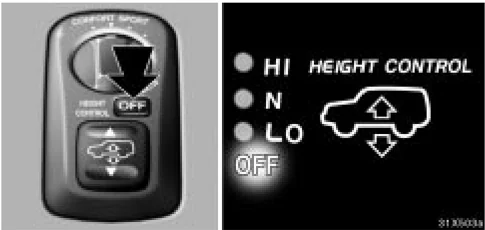
To turn off the active height control suspension with the vehicle stopped, push the height control switch. The height control "OFF" indicator light comes on and the vehicle height is fixed in the same mode as the height control switch is pushed.
This status is memorized in the system even after the engine is stopped.
If you push the switch again, the height control "OFF" indicator light goes out and the active height control suspension is turned on.
STARTING AND DRIVING
CAUTION If you drive through deep water over about 500 mm (20 in.) in depth, put the vehicle height in the HI (High) mode with the height select switch and then turn off the active height control suspension by pushing the height control switch. Drive your vehicle at 30 km/h (19 mph) or lower speed.
NOTICE
- When jacking up or installing tire chains, be sure to turn off the active height control suspension and stop the engine. Otherwise, the vehicle height may change because of the automatic leveling function, resulting in an accident.
- If your vehicle must be towed, put the vehicle height in the normal mode and turn off the active height control suspension. Otherwise, the vehicle height may change because of the automatic leveling function, resulting in an accident.
- If your vehicle gets ditched, turn off the active height control suspension with the height control switch. Otherwise, the vehicle height may change because of the automatic leveling function, resulting in an accident.
Even after the active height control suspension is turned off with the height control switch, if the vehicle speed exceeds 30 km (19 mph), the active height control automatically selects the normal mode.
(f) Height control indicator lights

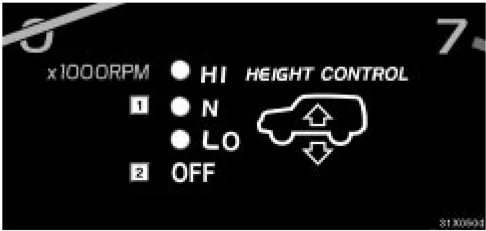
▶ [1] Height control indicator lights [2] Height control "OFF" indicator light
When the ignition switch is turned on, all the indicator lights come on. The indicator light showing the present mode only remains on and all other lights go off after a few seconds. This means the system operates correctly.
If you change the vehicle height mode, the indicator lights change as follows:
255
STARTING AND DRIVING
 ▶○: Blinking ●: Illuminating
When changing the vehicle height from the normal mode to high:
-
The "N" (normal) mode indicator light goes off and the "HI" (high) mode indicator light blinks.
-
After the vehicle height control reaches the high mode, the high mode indicator light remains on.
With the active height control suspension turned off, if you operate the height select switch or the vehicle height is changing depending on the vehicle speed, the vehicle height control enters the ready mode. In this case, the height control indicator lights change as follows:
-
The present mode indicator light comes on and at the same time the ready mode indicator light blinks.
-
When the active height control suspension is turned on, the present mode indicator light goes off and the ready mode indicator light blinks. (The vehicle height changes.)
-
After the vehicle height has changed completely, the changed mode indicator light stays on.
If the vehicle is loaded heavily, the vehicle height cannot be raised even if the height select switch is operated. If the underbody of the vehicle has touched the surface on bumpy roads, the vehicle height cannot be lowered with the height select switch. The height control indicator lights change as follows:
-
The present mode indicator light goes off and the selected mode indicator light blinks.
-
The selected mode indicator light goes off. (The vehicle height does not change.) The present mode indicator light comes on again.
Height control "OFF" indicator light: When the ignition switch is turned on, this light comes on. If it goes out after a few seconds, the active height control suspension operates correctly. If you push the height control switch, the active height control is turned off. The height control "OFF" indicator light comes on.
In the following cases, there is a problem somewhere in your active height control suspension. Although there is no problem to continue normal driving, have the active height control suspension checked by your Lexus dealer as soon as possible.
- The height control "OFF" indicator light does not come on when the ignition switch is turned on.
- The height control "OFF" indicator light blinks.
256
STARTING AND DRIVING
(g) Operation in cold weather
The active height control suspension does not operate in cold weather when the suspension fluid temperature drops below –30°C (–22°F).
In this case, operating the height select switch does not change the vehicle height. The vehicle height control enters the ready mode and the selected height control indicator light blinks. The active height control becomes operable if the engine is warmed up with the suspension fluid temperature being raised within normal operating limits. The vehicle changes to the selected height when the vehicle height control is in the ready mode.
When the suspension fluid temperature is around –30°C (–22°F), the vehicle height cannot be raised even within the available load capacity. After warming up the engine, push the control switch on the "▼" side once and then on the "▲" side to select the desired vehicle height.
It takes longer to change the vehicle height when the suspension fluid temperature drops below –15°C (5°F).
(h) Parking and stopping tips
If you immediately stop the engine to park the vehicle after off-road driving, the vehicle height is lowered slightly as the vehicle becomes cool. When parking, make sure there is nothing that will be in contact with the underbody of the vehicle. When you start the engine, the vehicle returns to the previous height.
If you park the vehicle for a long time, the vehicle height may gradually lower. When parking for a long time, make sure there is nothing that will come in contact with the underbody of the vehicle. When you start the engine, the vehicle returns to the previous height.
If you stop the engine, the vehicle height may change in accordance with the change in the temperature. When you start the engine, the vehicle returns to the previous height.
(i) Installing or removing heavy equipment
If you install or remove heavy equipment exceeding 15 kg (33 lb.), the front torsion bar should be adjusted. Consult your Lexus dealer.
257
STARTING AND DRIVING
(j) Active height control failure warning If there is a problem somewhere in the active height control suspension, the normal mode is automatically selected. If this occurs, the height control "OFF" indicator light blinks and the vehicle height control cannot be activated until the malfunction is corrected.
Stop the engine and start it again. If the height control "OFF" indicator light goes out, the active height control suspension returns to normal. If the height control "OFF" indicator blinks again, bring your vehicle to your Lexus dealer as soon as possible and have it checked.
ADAPTIVE VARIABLE SUSPENSION (AVS) This adaptive variable suspension adjusts the damping effect on the shock absorbers with the damping mode select switch. Select one of the 4 modes which is suited to the driving conditions with the damping mode select switch to provide good riding comfort and stability.
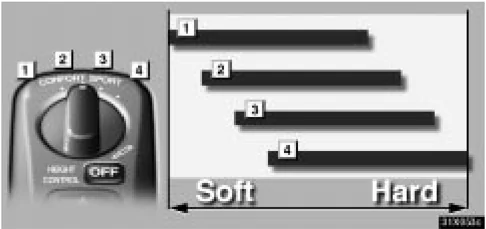
1 For driving on a bumpy road 2 For ordinary driving such as in the city traffic 3 For moderate high speed driving 4 For sporty type driving such as on winding mountain roads and high speed driving
We recommend you to select the mode 2 for ordinary driving. The damping effect will be changed automatically to provide good riding comfort.
258
STARTING AND DRIVING
When your vehicle is loaded heavily or you are driving in an unpaved road, the mode 3 or 4 will be recommended. To provide good vehicle stability, the damping effect will be harder than for ordinary driving mode.
With the four-wheel drive control lever at "L", the damping effect suitable for off-road driving will be provided.
ACTIVE TRACTION CONTROL SYSTEM
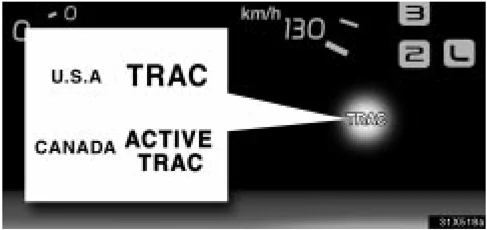
▶Active traction control system indicator light
The active traction control system automatically helps control the spinning of 4 wheels which may occur when accelerating on slippery road surfaces, by controlling the output of the brake and engine. Thus, the system assists driver to control the driving power of 4 wheels. When you turn the ignition switch on, the active traction control system always turns on automatically, and the active traction control indicator light will come on. The indicator light will go off after a few seconds.
When active traction control is applied, the active traction control system indicator light blinks.
259
STARTING AND DRIVING
You may hear a sound in the engine compartment for a few seconds when the engine is started or just after the vehicle begins to move. This means that the active traction control system is in the self-check mode, and does not indicate malfunction. When the active traction control system is operating, you may feel vibration or hear noise of your vehicle, caused by operation of the brakes. This indicates the system is functioning properly.
When getting the vehicle out of mud or new snow, etc., the active traction control system will help operate to prevent the wheels from spinning.
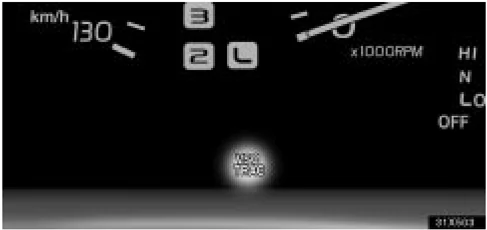
►Active traction control system failure warning
This light warns when there is a problem somewhere in the active traction control system or vehicle stability control system.
If the “VSC/TRAC” warning light comes on, have your vehicle checked by your Lexus dealer as soon as possible.
The brake actuator temperature increases during the active traction control system or vehicle stability control system operating. If the brake actuator temperature becomes too high while the active traction control system or vehicle stability control system is operating, a buzzer will start to sound intermittently to indicate that the active traction control system can no longer operate. In this case, immediately stop your vehicle at a safe place. If the system continues to operate, the buzzer sound changes from intermittent to continuous. (The continuous buzzer sound will stop after about 3 seconds.) At the time the “VSC/TRAC” warning light will come on and the active traction control system temporarily stops operating in order to protect the brake actuator. (Although the active traction control system does not operate, there is no problem to continue your driving.) The system will be automatically restored after a short time and “VSC/TRAC” warning light goes off if the accelerator pedal is released.
When the “ABS” warning light comes on, the active traction control system is not operating.
The “VSC/TRAC” warning light will come on when the ignition key is turned to “ON”, and will go off after a few seconds.
The “VSC/TRAC” warning light may stay on for 60 seconds after the ignition key is turned to the “ON” position. It is normal if it goes off after a few seconds.
Depressing the brake pedal repeatedly may turn on the “VSC/TRAC” warning light. It is normal if it goes off after a few seconds.
When the “VSC/TRAC” warning light comes on, the active traction control system is not operating, but there is no problem if you continue to drive.
260
STARTING AND DRIVING
In the following cases, contact your Lexus dealer:
- The “VSC/TRAC” warning light does not come on after the ignition is turned to on.
- The “VSC/TRAC” remains on after the ignition is turned to on.
CAUTION
Under certain slippery road conditions, full traction of the vehicles and power to 4 wheels may not be maintained, even though the active traction control system is in operation. Do not drive the vehicle under any speed or maneuvering conditions which will cause the vehicle to lose traction. In situations where the road surface is covered with ice or snow, your vehicle should be fitted with snow tires or tire chains. Always drive at an appropriate and cautious speed for the road conditions present.
VEHICLE STABILITY CONTROL SYSTEM
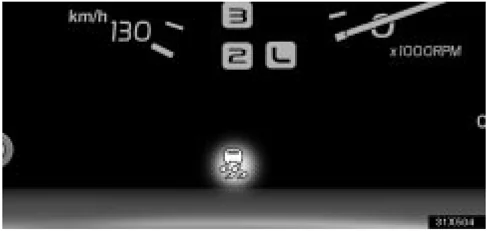
The vehicle stability control system helps provide integrated control of the systems such as anti-lock brakes, traction control, engine control, etc. This system automatically controls the output of the brakes or engine to help prevent the vehicle from skidding under adverse conditions.
When you turn the ignition switch on, the slip indicator light will come on. The slip indicator light will go off after a few seconds
If the vehicle is going to skid during driving, the slip indicator light flashes and an alarm sounds intermittently.
261
STARTING AND DRIVING
The vehicle stability control system activates when the vehicle speed is more than the following speed.
Four-wheel drive control lever in “H” .. 15 km/h (9 mph) Four-wheel drive control lever in “L” .. 30 km/h (19 mph)
You may hear a sound in the engine compartment for a few seconds when the engine is started or just after the vehicle begins to move. This means that the vehicle stability control is in the self-check mode and does not indicate a malfunction.
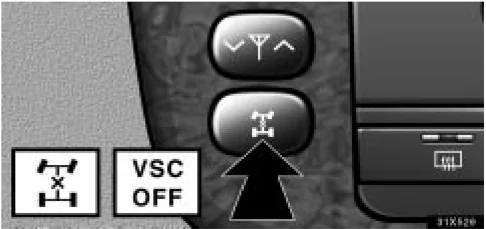
Pushing the center differential lock button automatically turns the vehicle stability control system off. At this time, the “VSC OFF” indicator comes on with the center differential lock indicator light. (For details, see “Four-wheel drive system” on page 241.)
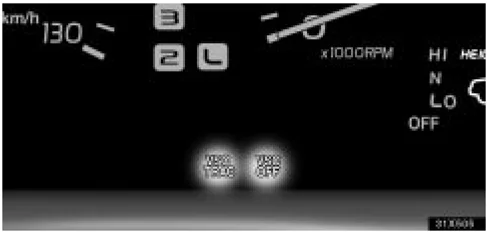
►Vehicle stability control system failure warning
These lights warn when there is a problem somewhere in the vehicle stability control system or active traction control system.
If the “VSC/TRAC” warning light and “VSC OFF” indicator light come on, have your vehicle checked by your Lexus dealer as soon as possible. However, there is no problem even if the “VSC/TRAC” warning light comes on when the brake actuator temperature becomes high. (For details, see “Active traction control system” on page 259.)
When the “ABS” warning light comes on, the vehicle stability control system is not operating.
The lights will come on when the ignition key is turned to “ON”, and will go off after a few seconds.
The lights may stay on for 60 seconds after the ignition key is turned to the “ON” position. It is normal if they go off after a few seconds.
262
STARTING AND DRIVING
Depressing the brake pedal repeatedly may turn on the lights. It is normal if they go off after a few seconds.
When the “VSC/TRAC” warning light and “VSC OFF” indicator light come on, the vehicle stability control system is not operating, but there is no problem if you continue to drive.
In the following cases, contact your Lexus dealer:
- The “VSC/TRAC” warning light, “VSC OFF” indicator light and slip indicator light do not come on after the ignition is turned to on.
- The “VSC/TRAC” warning light and “VSC OFF” indicator light remain on after the ignition is turned to on.
- The “VSC OFF” indicator light comes on while driving without pushing the center differential lock switch.
CAUTION
-
Active traction control system, vehicle stability control system and anti-lock brake system are electronic systems designed to help the driver maintain control under adverse conditions. They are not a substitute for safe driving practices. Factors including speed, road conditions and driver steering input can all affect whether active traction control system, vehicle stability control system and anti-lock brake system will be effective in preventing a loss of control. Always keep safety driving in mind. If the slip indicator light flashes, sounding an alarm, special care should be taken while driving.
-
Only use tires of specified size. The size, manufacturer, brand and tread pattern for all 4 tires should be the same. If you use the tires other than specified, or different type or size, the vehicle stability control system may not function correctly. When replacing the tires or wheels, contact your Lexus dealer. (See “Checking and replacing tires” on page 367.)
263
STARTING AND DRIVING
VARIABLE GEAR RATIO STEERING SYSTEM
The variable gear ratio steering system adjusts the wheel turning angle depending on the vehicle speed and how much you turn the steering wheel.
The vehicle wheel turning angle will be changed with a smaller degree of wheel maneuvering when you are driving at very low speed such as when putting your vehicle into a garage.
In the following cases, to prevent the system from overheating, the system could be temporarily deactivated with the change in the center position of the steering wheel. This is not a malfunction. After the cause of the problem is eliminated, the system will return to normal automatically after a few minutes.
- If you continue maneuvering the steering wheel when the vehicle is stopped or running at very low speed
- If you continue driving holding the steering wheel to the extreme right or left
- If you maneuver the steering wheel immediately after starting the engine at less than about –30°C (–22°F)
While the system is not functioning, a larger degree of wheel maneuvering is needed during driving at low speed. If the center position of the steering wheel is changed frequently, have your vehicle inspected at your Lexus dealer.
CAUTION Take due care especially when driving at low speed as the vehicle changes direction in greater proportion to the steering wheel maneuvering.
NOTICE Do not disconnect the battery with the steering wheel turned, or the center position of the steering wheel could be slightly and temporarily changed. However, after driving for a short while, the system will return to normal and the center position of the steering wheel will be in the appropriate position.
The light will flash if you disconnect and reconnect the battery terminal. This is because the system is reset temporarily. However, it is no problem to drive. To turn off the light, drive for a short while. The system will be set automatically and return to normal.
264
Variable gear ratio steering system failure warning
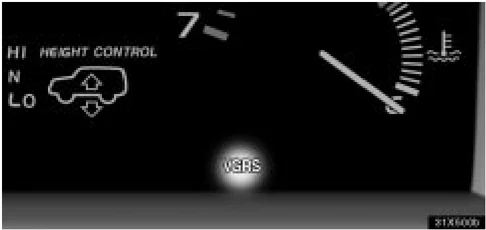
This light warns that there is a problem somewhere in the variable gear ratio steering system.
The light will come on when the ignition key is turned to “ON” and will go off after a few seconds.
If the light comes on while driving, the system is not working. Although conventional steering operates when maneuvered, a larger degree of wheel maneuvering (than at the time when the system is functioning properly) is needed when driving at low speed. At this time, the center position of the steering wheel could be changed. Although it is no problem to continue driving, have your vehicle repaired at your Lexus dealer.
STARTING AND DRIVING
In the following cases, contact your Lexus dealer.
- The warning light does not come on after the ignition key is turned to “ON”.
- The warning light remains on after the ignition key is turned to “ON”.
- The warning light comes on while driving.
265
STARTING AND DRIVING
BRAKE SYSTEM
This brake system has 2 independent hydraulic circuits. If either circuit should fail, the other will still work. However, the pedal will be harder to press, and your stopping distance will increase. Also, the brake system warning light may come on.
CAUTION Do not drive your vehicle with only a single brake system. Have your brakes fixed immediately.
Brake booster
The brake booster uses brake fluid pressurized by the pump to power-assist the brakes. If the brake booster fails during driving, the brake system warning light comes on and buzzer sounds continuously. In this case, the brakes may not work properly. If they do not work well, depress the brake pedal firmly. If the brake system warning light comes on, immediately stop your vehicle and contact your Lexus dealer.
The brake system warning light may stay on for about 60 seconds after the ignition key is turned to the "ON" position. It is normal if the light turns off after a while.
Depressing the brake pedal repeatedly may turn on the brake system warning light and buzzer. It is normal if the light goes out and the buzzer stops sounding after a few seconds.
You may hear a small sound in the engine compartment after the engine is started or the brake pedal is depressed repeatedly. This is a pump pulsating sound of the brake system, and it is not a malfunction.
CAUTION
- Do not pump the brake pedal if the engine stalls. Each push on the pedal uses up your brake fluid pressure reserve.
- Even if the power assist is completely lost, the brakes will still work. But you will have to push the pedal hard, much harder than normal. And your braking distance will increase.
Anti-lock brake system
The anti-lock brake system is designed to automatically help prevent lock-up of the wheels during a sudden brake or braking on slippery road surfaces. This assists in providing directional stability and steering performance of the vehicle under these circumstances.
Effective way to press the ABS brake pedal: When the anti-lock brake system function is in action, you may feel the brake pedal pulsating and hear a noise. In this situation, to let the anti-lock brake system work for you, just hold the brake pedal down more firmly. Do not pump the brake in a panic stop. This will result in reduced braking performance.
266
STARTING AND DRIVING
The anti-lock brake system becomes operative after the vehicle has accelerated to a speed in excess of approximately 10 km/h (6 mph). It stops operating when the vehicle decelerates to a speed below approximately 5 km/h (3 mph).
Depressing the brake pedal on slippery road surfaces such as on a manhole cover, a steel plate at a construction site, joints in a bridge, etc. on a rainy day tends to activate the anti-lock brake system.
You may hear a click or motor sound in the engine compartment for a few seconds when the engine is started or just after the vehicle begins to move. This means that the anti-lock brake system is in the self-check mode, and does not indicate a malfunction.
When the anti-lock brake system is activated, the following conditions may occur. They do not indicate a malfunction of the system:
- You may hear the anti-lock brake system operating and feel the brake pedal pulsating and the vibrations of the vehicle body and steering wheel. You may also hear the motor sound in the engine compartment even after the vehicle is stopped.
- At the end of the anti-lock brake system activation, the brake pedal may move a little to the forward.
CAUTION
Do not overestimate the anti-lock brake system: Although the anti-lock brake system assists in providing vehicle control, it is still important to drive with all due care and maintain a moderate speed and safe distance from the vehicle in front of you, because there are limits to the vehicle stability and effectiveness of steering wheel operation even with the anti-lock brake system on.
If tire grip performance exceeds its capability, or if hydroplaning occurs during high speed driving in the rain, the anti-lock brake system does not provide vehicle control.
Anti-lock brake system is not designed to shorten the stopping distance: Always drive at a moderate speed and maintain a safe distance from the vehicle in front of you. Compared with vehicles without an anti-lock brake system, your vehicle may require a longer stopping distance in the following cases:
- Driving on rough, gravel or snow-covered roads.
- Driving with tire chains installed.
267
STARTING AND DRIVING
- Driving over the steps such as the joints on the road.
- Driving on roads where the road surface is pitted or has other differences in surface height.
Install all 4 tires of specified size at appropriate pressure: The anti-lock brake system detects vehicle speeds using the speed sensors for respective wheels' turning speeds. The use of tires other than specified may fail to detect the accurate turning speed resulting in a longer stopping distance.
"ABS" warning light
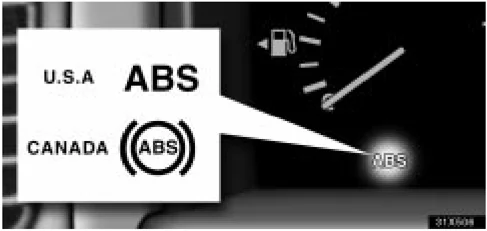
The light comes on when the ignition key is turned to the "ON" position. If the anti-lock brake system and the brake assist system work properly, the light turns off after a few seconds. Thereafter, if either of the systems malfunctions, the light comes on again.
When the "ABS" warning light is on (and the brake system warning light is off), the anti-lock brake system, the brake assist system, the active traction control system and/or the vehicle stability control system do/does not operate, but the brake system still operates conventionally.
When the "ABS" warning light is on (and the brake system warning light is off), the anti-lock brake system does not operate so that the wheels could lock up during a sudden braking or braking on slippery road surfaces.
268
STARTING AND DRIVING
If either of the following conditions occurs, this indicates a malfunction somewhere in the components monitored by the warning light system. Contact your Lexus dealer as soon as possible to service the vehicle.
- The light does not come on when the ignition key is turned to the “ON” position, or remains on.
- The light comes on while you are driving.
A warning light turning on briefly during operation does not indicate a problem.
CAUTION
If the “ABS” warning light remains on together with the brake system warning light, immediately stop your vehicle at a safe place and contact your Lexus dealer.
In this case, not only the anti-lock brake system will fail but also the vehicle will become extremely unstable during braking.
Either of the following conditions may occur, but do not indicate a malfunction:
- The light may stay on for about 60 seconds after the ignition key is turned to the “ON” position. It is normal if it turns off after a while.
- Depressing the brake pedal repeatedly may turn on the light. It is normal if it turns off after a few seconds.
Brake assist system
When you slam the brakes on, the brake assist system judges as an emergency stop and provides more powerful braking for a driver who cannot hold down the brake pedal firmly.
When you slam the brakes on, more powerful braking will be applied. At this time, you may hear a sound in the engine compartment and feel the vibrations of the brake pedal. This does not indicate a malfunction.
The brake assist system becomes operative after the vehicle has accelerated to a speed in excess of approximately 10 km/h (6 mph). It stops operating when the vehicle decelerates to a speed below approximately 5 km/h (3 mph).
The brake assist system may not work for about 60 seconds after the engine is started.
For an explanation of this system’s warning light, see “ABS warning light” on page 54 or 268.
Drum-in-disc type parking brake system
Your vehicle has a drum-in-disc type parking brake system. This type of brake system needs bedding-down of the brake shoes periodically or whenever the parking brake shoes and/or drums are replaced.
Have your Lexus dealer perform the bedding-down.
269
STARTING AND DRIVING
BRAKE PAD WEAR LIMIT INDICATORS
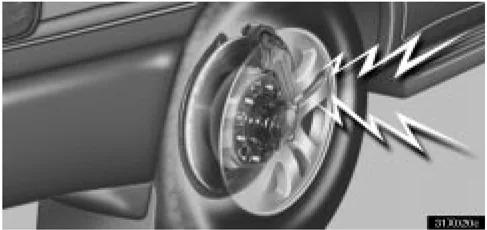
The brake pad wear limit indicators on your disc brakes give a warning noise when the brake pads are worn to the extent that replacement is required.
If you hear a squealing or scraping noise while driving, have the brake pads checked and replaced by your Lexus dealer as soon as possible. Expensive rotor damage can result if the pads are not replaced when needed.
TYPES OF TIRES
Determine what kind of tires your vehicle is originally equipped with.
- Summer tires Summer tires are high-speed capability tires best suited to highway driving under dry conditions.
Since summer tires do not have the same traction performance as snow tires, summer tires are inadequate for driving on snow-covered or icy roads. For driving on snow-covered or icy roads, we recommend using snow tires. If installing snow tires, be sure to replace all four tires.
- All season tires All season tires are designed to provide better traction in snow and to be adequate for driving in most winter conditions, as well as for use all year round.
All season tires, however, do not have adequate traction performance compared with snow tires in heavy or loose snow. Also, all season tires fall short in acceleration and handling performance compared with summer tires in highway driving.
270
STARTING AND DRIVING
CAUTION
- Do not mix summer and all season tires on your vehicle as this can cause dangerous handling characteristics, resulting in loss of control.
- Do not use tires other than the manufacturer's designated tires, and never mix tires or wheels of the sizes different from the originals.
271
272
SECTION 3 – 2
STARTING AND DRIVING
Driving tips
- Off-road vehicle precautions . . . . . . . . . . . . . . . . . . . . . . . . . . . . . . . . . . . . . . . . . . . . . . . . . . . . . . . . . . . . . . . . . . . . . . . . . . . . . . . . . . . . . . . . . . . . . . . . . . . . . . . . . . . . . . . . . . . . . . . . . . . . . . . . . . . . . . . . . . . . . . . . . . . . . . . . . . . . . . . . . . . . . . . . . . . . . . . . . . . . . . . . . . . . . . . . . . . . . . . . . . . . . . . . . . . ........ 273
- Break-in period . . . . . . . . . . . . . . . . . . . . . . . . . . . . . . . . . . . . . . . . . . . . . . . . . . . . . . . . . . . . . . . . . . . . . . . . . . . . . . . . . . . . . . . . . . . . . . . . . . . . . . . . . . . . . . . . . . . . ........ 274
- Operation in foreign countries . . . . . . . . . . . . . . . . . . . . . . . . . . . . . . . . . . . . . . . . . . . . . . . . . . . . . . . . . . . . . . . . . . . . . . . . . . . . . . . . . . . . . . . . . . . . . . . . . . . . . . . . . . . ........

DRIVING TIPS
OFF-ROAD VEHICLE
PRECAUTIONS
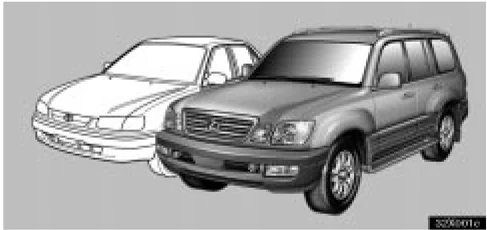
This vehicle belongs to the utility vehicle class, which has higher ground clearance and narrower tread in relation to the height of its center of gravity to make it capable of performing in a wide variety of off-road applications. Specific design characteristics give it a higher center of gravity than ordinary passenger cars. This vehicle design feature causes this type of vehicle to be more likely to rollover. And, utility vehicles have a significantly higher rollover rate than other types of vehicles. An advantage of the higher ground clearance is a better view of the road allowing you to anticipate problems. It is not designed for cornering at the same speeds as ordinary passenger cars any more than low-slung sports cars designed to perform satisfactorily under off-road conditions. Therefore, sharp turns at excessive speeds may cause rollover.
CAUTION
Always observe the following precautions to minimize the risk of serious personal injury or damage to your vehicle:
- In a rollover crash, an unbelted person is significantly more likely to die than a person wearing a seat belt. Therefore, the driver and all passengers should fasten their seat belts whenever the vehicle is moving.
- Avoid sharp turns or abrupt maneuvers, if at all possible. Failure to operate this vehicle correctly may result in loss of control or vehicle rollover causing death or serious injury.
- Loading cargo on the roof luggage carrier will make the center of the vehicle gravity higher. Avoid high speeds, sudden starts, sharp turns, sudden braking or abrupt maneuvers, otherwise it may result in loss of control or vehicle rollover due to failure to operate this vehicle correctly.
- Always slow down in gusty crosswinds. Because of its profile and higher center of gravity, your vehicle is more sensitive to side winds than an ordinary passenger car. Slowing down will allow you to have better control.
273
DRIVING TIPS
- When driving off-road or in rugged terrain, do not drive at excessive speeds, jump, make sharp turns, strike objects, etc. This may cause loss of control or vehicle rollover causing death or serious injury. You are also risking expensive damage to your vehicle's suspension and chassis.
- Do not drive horizontally across steep slopes. Driving straight up or straight down is preferred. Your vehicle (or any similar off-road vehicle) can tip over sideways much more easily than forward or backward.
BREAK-IN PERIOD
Drive gently and avoid high speeds.
You need not follow a break-in schedule with your new Lexus. But following a few simple tips for the first 1600 km (1000 miles) can add to the future economy and long life of your vehicle:
- Avoid full throttle acceleration when starting and driving.
- Avoid racing the engine.
- Try to avoid hard stops during the first 300 km (200 miles).
- Do not drive for a long time at any single speed, either fast or slow.
- Do not tow a trailer during the first 800 km (500 miles).
OPERATION IN FOREIGN COUNTRIES
If you plan to drive your Lexus in another country ... First, comply with the vehicle registration laws. Second, confirm the availability of the correct fuel (unleaded and minimum octane rating).
274
DRIVING TIPS
TIPS FOR DRIVING IN VARIOUS CONDITIONS
- Always slow down in gusty crosswinds. This will allow you much better control.
- Drive slowly onto curbs and, if possible, at a right angle. Avoid driving onto high, sharp-edged objects and other road hazards. Failure to do so can lead to severe tire damage such as a tire burst. Drive slowly when passing over bumps or travelling on a bumpy road. Otherwise, the impact could cause severe damage to the tires and/or wheels.
- When parking on a hill, turn the front wheels until they touch the curb so that the vehicle will not roll. Apply the parking brake, and place the transmission in "P". If necessary, block the wheels.
- Washing your vehicle or driving through deep water may get the brakes wet. To see whether they are wet, check that there is no traffic near you and then press the pedal lightly. If you do not feel a normal braking force, the brakes are probably wet. To dry them, drive the vehicle cautiously while lightly pressing the brake pedal with the parking brake applied. If they still do not work safely, pull to the side of the road and call a Lexus dealer for assistance.
⚠ CAUTION
- Before driving off, make sure the parking brake is fully released and that the parking brake reminder light is off.
- Do not leave your vehicle unattended while the engine is running.
- Do not rest your foot on the brake pedal while driving. It can cause dangerous overheating, needless wear, and poor fuel economy.
- To drive down a long or steep hill, reduce your speed and downshift. Remember, if you ride the brakes excessively, they may overheat and not work properly. See page 238.
- Be careful when accelerating, upshifting, downshifting or braking on a slippery surface. The abrupt change in engine speed, such as sudden acceleration or engine braking, could cause the vehicle to spin or skid.
- Do not drive in excess of the speed limit. Even if the legal speed limit permits it, do not drive over 140 km/h (85 mph) unless your vehicle has high-speed capability tires. Driving over 140 km/h (85 mph) may result in tire failure, loss of control and possible injury. Be sure to consult a tire dealer to determine whether the tires on your vehicle are high-speed capability tires or not before driving at such speeds.
275
DRIVING TIPS
- Do not continue normal driving when the brakes are wet. If they are wet, your vehicle will require a longer stopping distance, and it may pull to one side when the brakes are applied. Also, the parking brake will not hold the vehicle securely.
- If you drive through deep water over about 500 mm (20 in.) in depth, put the vehicle height in the HI (High) mode with the active height select switch and then turn off the active height control suspension by pushing the height control switch. Drive your vehicle at 30 km/h (19 mph) or lower speed.
OFF-ROAD DRIVING PRECAUTIONS
When driving your vehicle off-road, please observe the following precautions to ensure your driving enjoyment and to help prevent the closure of areas to off-road vehicles.
a. Drive your vehicle only in areas where off-road vehicles are permitted to travel.
b. Respect private property. Get owner's permission before entering private property.
c. Do not enter areas that are closed. Honor gates, barriers and signs that restrict travel.
d. Stay on established roads. When conditions are wet, driving techniques should be changed or travel delayed to prevent damage to roads.
For owners in U.S. mainland, Hawaii and Puerto Rico:
To obtain additional information pertaining to driving your vehicle off-road, consult the following organizations.
- State and Local Parks and Recreation Departments
- State Motor Vehicle Bureau
- Recreational Vehicle Clubs
- U.S. Forest Service and Bureau of Land Management
276