Seating and Safety Restraints
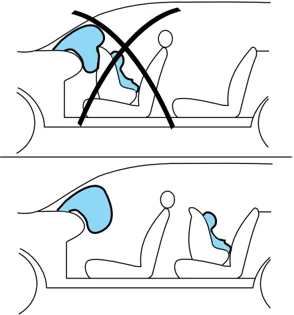
Children and air bags
For additional important safety information, read all information on safety restraints in this guide.
Children must always be properly restrained. Failure to follow these instructions may increase the risk of injury in a collision.
An infant in a rear-facing seat faces a high risk of serious or fatal injuries from a deploying passenger air bag. Rear facing infant seats should NEVER be placed in the front seats, unless the passenger air bag is turned off (if equipped with an air bag On/Off switch). See Passenger air bag ON/OFF switch.

124
Seating and Safety Restraints
How does the air bag supplemental restraint system work?
The air bag SRS is designed to activate when the vehicle sustains sufficient longitudinal deceleration.
The fact that the air bags did not inflate in a collision does not mean that something is wrong with the system. Rather, it means the forces were not of the type sufficient to cause activation. Air bags are designed to inflate in frontal and near-frontal collisions, not rollover, side-impact, or rear-impacts.
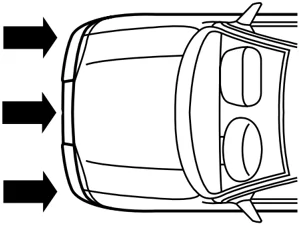
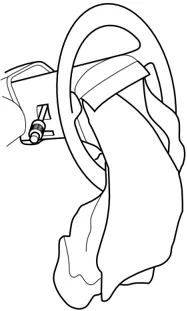
The air bags inflate and deflate rapidly upon activation. After air bag deployment, it is normal to notice a smoke-like, powdery residue or smell the burnt propellant. This may consist of cornstarch, talcum powder (to lubricate the bag) or sodium compounds (e.g., baking soda) that result from the combustion process that inflates the air bag. Small amounts of sodium hydroxide may be present which may irritate the skin and eyes, but none of the residue is toxic.
While the system is designed to help reduce serious injuries, it may also cause minor abrasions, swelling or temporary hearing loss. Because air bags must inflate rapidly and with considerable force, there is the risk of death or serious injuries such as fractures, facial and eye injuries or internal injuries, particularly to occupants who are not properly restrained or are otherwise out of position at the time of air bag deployment. Thus, it is extremely important that occupants be properly restrained as far away from the air bag cover as possible while maintaining vehicle control.
Several air bag system components get hot after inflation. Do not touch them after inflation.
125
Seating and Safety Restraints
If the air bag has deployed, the air bag will not function again and must be replaced immediately. If the air bag is not replaced, the unrepaired area will increase the risk of injury in a collision.
Determining if the system is operational
The SRS uses readiness lights in the instrument cluster and the passenger air bag on/off switch or a tone to indicate the condition of the system. Refer to the Air bag readiness section in the Instrument cluster chapter or Passenger air bag on/off switch section in this chapter. Routine maintenance of the air bag is not required.
A difficulty with the system is indicated by one or more of the following:
- The readiness lights will either flash or stay lit.
- The readiness lights will not illuminate immediately after ignition is turned on.
- A series of five beeps will be heard. The tone pattern will repeat periodically until the problem and/or light are repaired.

If any of these things happen, even intermittently, have the SRS serviced at your dealership or by a qualified technician immediately. Unless serviced, the system may not function properly in the event of a collision.
Disposal of air bags and air bag equipped vehicles (including pretensioners)
See your local dealership or qualified technician. Air bags MUST BE disposed of by qualified personnel.
Front passenger sensing system
The front passenger sensing system will turn off the front passenger's frontal air bag under certain conditions. The driver's air bag and side air bag are not part of the front passenger sensing system. The front passenger sensing system works with sensors that are part of the front passenger's seat and safety belt. The sensors are designed to detect the presence of a properly-seated occupant and determine if the front passenger's frontal air bag should be enabled (may inflate) or not.
The front passenger sensing system is designed to meet the regulatory requirements of Federal Motor Vehicle Safety Standard (FMVSS) 208 and is designed to turn off the front passenger's frontal air bag if:
126
Seating and Safety Restraints
- The front passenger seat is unoccupied.
- The system determines that a small child is present in a rear-facing child seat that is properly installed according to the manufacturer's instructions. (The system may not automatically turn the airbag OFF if a child seat is attached to the LATCH anchors on the front passenger seat of the Regular Cab, therefore turn the airbag OFF with the manual Airbag On/Off switch.)
- The system determines that a small child is present in a forward-facing child restraint that is properly installed according to the manufacturer's instructions. (The system may not automatically turn the airbag OFF if a child seat is attached to the LATCH anchors on the front passenger seat of the Regular Cab, therefore turn the airbag OFF with the manual Airbag On/Off switch.)
- The system determines that a small child is present in a booster seat. (The system may not automatically turn the airbag OFF if a booster is attached to the LATCH anchors on the front passenger seat of the Regular Cab, therefore turn the airbag OFF with the manual Airbag On/Off switch.)
- A front passenger takes his/her weight off of the seat for a period of time.
Even with the front passenger sensing system, children 12 and under should be properly restrained in the back seat.
When you install a child seat on the front passenger seat of a Regular Cab, turn the Passenger Airbag On/Off switch to OFF.
When the front passenger seat is occupied and the sensing system has turned off the passenger's frontal air bag, the "passenger air bag off" or "pass air bag off" indicator will light and stay lit to remind you that the front passenger frontal air bag is off. When the front passenger seat is not occupied (empty seat) or in the event that the front passenger frontal air bag is enabled (may inflate), the indicator light will be unlit.
The indicator light is located in the center stack of the instrument panel just above the radio. To confirm that the indicator light is functional, it will momentarily illuminate when the ignition is turned to the ON postion.

The front passenger sensing system is designed to turn off the front passenger's frontal air bag when a rear facing child seat, a forward-facing
127
Seating and Safety Restraints
child restraint, or a booster seat is detected. If the child restraint has been installed and the indicator is not lit, then turn the vehicle off, remove the child restraint from the vehicle and reinstall the restraint following the child restraint manufacturer’s directions. The system may not automatically turn the airbag OFF if a child seat is attached to the LATCH anchors on the front passenger seat of the Regular Cab, therefore turn the airbag OFF with the manual Airbag On/Off switch.
The front passenger sensing system is designed to enable (may inflate) the right front passenger’s frontal air bag anytime the system senses that a person of adult size is sitting properly in the front passenger seat. When the passenger sensing system has allowed the air bag to be enabled, the indicator will be unlit and stay unlit to remind you that the air bag is enabled (may inflate).
If a person of adult-size is sitting in the front passenger’s seat, but the “passenger air bag off” or “pass air bag off” indicator is lit, it could be that the person isn’t sitting properly in the seat. If this happens, turn the vehicle off and ask the person to place the seatback in the full upright position, then sit upright in the seat, centered on the seat cushion, with the person’s legs comfortably extended. Restart the vehicle and have the person remain in this position for about two minutes. This will allow the system to detect that person and then enable the passenger’s air bag. If the indicator lamp remains lit even after this, then the occupant should be advised to ride in the back seat.
After all occupants have adjusted their seats and put on seat belts, it’s very important that they continue to sit upright, with their back against the seatback, with their feet comfortably extended on the floor while the vehicle is still in motion. Sitting improperly can increase the chance of injury in a crash event. For example, if an occupant slouches, lies down, turns sideways, sits forward, leans forward or sideways, or puts one or both feet up, the chance of injury during a crash is greatly increased.
Sitting improperly out of position or with the seatback reclined too far can take off weight from the seat cushion and affect the decision of the passenger sensing system, resulting in serious injury or death in a crash. Always sit upright against your seatback, with your feet on the floor.
128
Seating and Safety Restraints
Vehicles without rear seats are equipped with an Airbag On/Off switch, which will override the decision from the passenger sensing system when turned to OFF. When you install child seats (with or without the LATCH system) on the front passenger seat of vehicles that do not have a rear seat, the airbag cut-off switch should be turned to OFF to turn off the airbag. If there is an adult on the passenger seat, the airbag cut-off switch should be turned to ON to enable the airbag. Again, placing children on the front seat is ONLY recommended for vehicles that do not have a rear seat, otherwise all children 12 and under should be properly restrained in the rear seat.
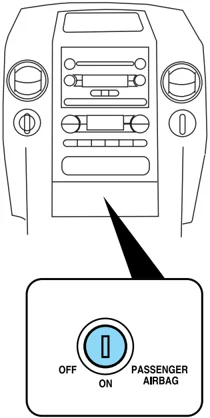
When you install a child seat on the front passenger seat of a Regular Cab, turn the Passenger Airbag On/Off switch to OFF.
In case there is a problem with the passenger sensing system, the air bag readiness light in the instrument cluster will stay lit. Do NOT attempt to repair or service the system; take your vehicle immediately to the dealer.
The front passenger air bag is not designed to offer protection to an occupant in the center front seating position.
An out of position front center occupant could affect the decision of the front passenger sensing system.
129
Seating and Safety Restraints
If it is necessary to modify an advanced front air bag system to accommodate a person with disabilities, contact the Ford Customer Relationship Center at the phone number shown in the Customer Assistance section of this Owner's Guide.
Any alteration/modification to the front passenger seat may affect the performance of the front passenger sensing system.
Passenger air bag ON/OFF switch (if equipped)
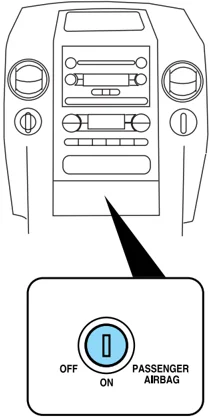
An air bag ON/OFF switch has been installed in this vehicle. Before driving, always look at the face of the switch to be sure the switch is in the proper position in accordance with these instructions and warnings. Failure to put the switch in a proper position can increase the risk of serious injury or death in a collision.

OFF ON PASSENGER AIRBAG
130
Seating and Safety Restraints
Turning the passenger air bag off
- Insert the ignition key, turn the switch to OFF position and hold in OFF position while removing the key.
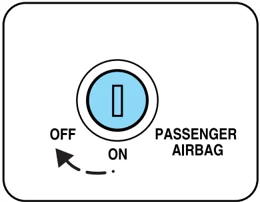
- When the ignition is turned to the ON position the “passenger airbag off” indicator light illuminates briefly, momentarily shuts off and then turns back on. This indicates that the passenger air bag is deactivated. Refer to Front passenger sensing system in this chapter.
If the OFF light fails to illuminate when the passenger air bag ON/OFF switch is in the OFF position and the ignition switch is in ON, have the passenger air bag ON/OFF switch serviced at your Ford or Lincoln-Mercury dealer immediately.
In order to avoid inadvertent activation of the switch, always remove the ignition key from the passenger air bag ON/OFF switch.
131

Seating and Safety Restraints
Turning the passenger air bag back on
The passenger air bag remains OFF until you turn it back ON.
- Insert the ignition key and turn the switch to ON.
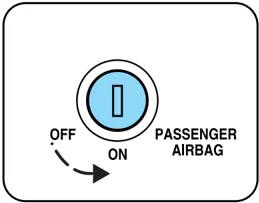
- The “passenger airbag off” indicator light will briefly illuminate when the ignition is turned to ON. This indicates that the passenger air bag is operational. Refer to Front passenger sensing system in this chapter.
The passenger-side air bag should always be turned to the ON position (the “passenger airbag off” or “pass airbag off” indicator light should not be illuminated) unless the passenger is a person who meets the requirements stated either in Category 1, 2 or 3 of the NHTSA/Transport Canada deactivation criteria which follows.
The safety belts for the driver and right front passenger seating positions have been specifically designed to function together with the air bags in certain types of crashes. When you turn OFF your air bag, you not only lose the protection of the air bag, you also may reduce the effectiveness of your safety belt system, which was designed to work with the air bag. If you are not a person who meets the requirements stated in the NHTSA/Transport Canada deactivation criteria turning OFF the air bag can increase the risk of serious injury or death in a collision.
An infant in a rear-facing seat faces a high risk of serious or fatal injuries from a deploying passenger air bag. Rear facing infant seats should NEVER be placed in the front seats, unless the passenger air bag is turned off (if equipped with an air bag On/Off switch). See Passenger air bag ON/OFF switch.
132

Seating and Safety Restraints
The vast majority of drivers and passengers are much safer with an air bag than without. To do their job and reduce the risk of life threatening injuries, air bags must open with great force, and this force can pose a potentially deadly risk in some situations, particularly when a front seat occupant is not properly buckled up. The most effective way to reduce the risk of unnecessary air bag injuries without reducing the overall safety of the vehicle is to make sure all occupants are properly restrained in the vehicle, especially in the front seat AND TO AVOID PLACING OBJECTS ON OR OVER AIR BAG COVER. This provides the protection of safety belts and permits the air bags to provide the additional protection they were designed to provide. If you choose to deactivate your air bag, you are losing the very significant risk-reducing benefits of the air bag and you are also reducing the effectiveness of the safety belts, because safety belts in modern vehicles are designed to work as a safety system with the air bags.
Read all air bag Warning labels in the vehicle as well as the other important air bag instructions and Warnings in this Owner's Guide.
NHTSA deactivation criteria (excluding Canada)
- Infant. An infant (less than 1 year old) must ride in the front seat because:
- the vehicle has no rear seat;
- the vehicle has a rear seat too small to accommodate a rear-facing infant seat; or
- the infant has a medical condition which, according to the infant's physician, makes it necessary for the infant to ride in the front so that the driver can constantly monitor the child's condition.
- Child age 1 to 12. A child age 1 to 12 must ride in the front seat because:
- the vehicle has no rear seat;
- although children ages 1 to 12 ride in the rear seat(s) whenever possible, children ages 1 to 12 sometimes must ride in the front because no space is available in the rear seat(s) of the vehicle; or
- the child has a medical condition which, according to the child's physician, makes it necessary for the child to ride in the front seat so that the driver can constantly monitor the child's condition.
- Medical condition. A passenger has a medical condition which, according to his or her physician:
- causes the passenger air bag to pose a special risk for the passenger; and
133
Seating and Safety Restraints
- makes the potential harm from the passenger air bag in a crash greater than the potential harm from turning OFF the air bag and allowing the passenger, even if belted, to hit the dashboard or windshield in a crash.
Transport Canada deactivation criteria (Canada Only)
- Infant: An infant (less than 1 year old) must ride in the front seat because:
- the vehicle has no rear seat;
- the rear seat in my vehicle cannot accommodate a rear-facing infant seat; or
- the infant has a medical condition which, according to the infant's physician, makes it necessary for the infant to ride in the front seat so that the driver can monitor the infant's condition.
- Child age 12 or under: A child age 12 or under must ride in the front seat because:
- the vehicle has no rear seat;
- although children age 12 and under ride in the rear seat whenever possible, children age 12 and under have no option but to sometimes ride in the front seat because rear seat space is insufficient; or
- the child has a medical condition that, according to the child's physician, makes it necessary for the child to ride in the front seat so that the driver can monitor the child's condition.
- Medical condition: A passenger has a medical condition that, according to his or her physician:
- poses a special risk for the passenger if the air bag deploys; and
- makes the potential harm from the passenger air bag deployment greater than the potential harm from turning OFF the air bag and experiencing a crash without the protection offered by the air bag
SAFETY RESTRAINTS FOR CHILDREN
See the following sections for directions on how to properly use safety restraints for children. Also see Air bag supplemental restraint system (SRS) in this chapter for special instructions about using air bags.
Important child restraint precautions
You are required by law to use safety restraints for children in the U.S. and Canada. If small children (generally children who are four years old
134
Seating and Safety Restraints
or younger and who weigh 40 lbs[18 kg] or less) ride in your vehicle, you must put them in safety seats made especially for children. Many states require that children use approved booster seats until they are eight years old. Check your local and state or provincial laws for specific requirements regarding the safety of children in your vehicle. When possible, always place children under age 12 in the rear seat of your vehicle. Accident statistics suggest that children are safer when properly restrained in the rear seating positions than in the front seating position.
Never let a passenger hold a child on his or her lap while the vehicle is moving. The passenger cannot protect the child from injury in a collision.
Always follow the instructions and warnings that come with any infant or child restraint you might use.
Children and safety belts
If the child is the proper size, restrain the child in a safety seat. Children who are too large for child safety seats (as specified by your child safety seat manufacturer) should always wear safety belts.
Follow all the important safety restraint and air bag precautions that apply to adult passengers in your vehicle.
If the shoulder belt portion of a combination lap and shoulder belt can be positioned so it does not cross or rest in front of the child's face or neck, the child should wear the lap and shoulder belt. Moving the child closer to the center of the vehicle may help provide a good shoulder belt fit.
Do not leave children, unreliable adults, or pets unattended in your vehicle.
Child booster seats
Children outgrow a typical convertible or toddler seat when they weigh 40 pounds (18 kg) and are around 4 years of age. Although the lap/shoulder belt will provide some protection, these children are still too small for lap/shoulder belts to fit properly, which could increase the risk of serious injury.
To improve the fit of both the lap and shoulder belt on children who have outgrown child safety seats, Ford Motor Company recommends use of a belt-positioning booster.
135
Seating and Safety Restraints
Booster seats position a child so that safety belts fit better. They lift the child up so that the lap belt rests low across the hips and the knees bend comfortably. Booster seats also make the shoulder belt fit better and more comfortably for growing children.
When children should use booster seats
Children need to use booster seats from the time they outgrow the toddler seat until they are big enough for the vehicle seat and lap/shoulder belt to fit properly. Generally this is when they weigh about 80 lbs (36 kg) (about 8 to 12 years old).
Booster seats should be used until you can answer YES to ALL of these questions:
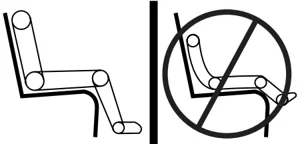
- Can the child sit all the way back against the vehicle seat back with knees bent comfortably at the edge of the seat without slouching?
- Does the lap belt rest low across the hips?
- Is the shoulder belt centered on the shoulder and chest?
- Can the child stay seated like this for the whole trip?
Types of booster seats
There are two types of belt-positioning booster seats:
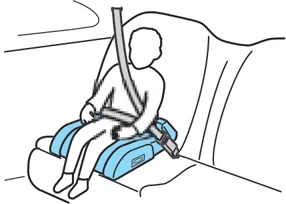
- Those that are backless.
If your backless booster seat has a removable shield, remove the shield and use the lap/shoulder belt. If a seating position has a low seat back and no head restraint, a backless booster seat may place your child's head (top of ear level) above the top of the seat. In this case, move the backless booster to another seating position with a higher seat back and lap/shoulder belts.
136
Seating and Safety Restraints
- Those with a high back. If, with a backless booster seat, you cannot find a seating position that adequately supports your child’s head, a high back booster seat would be a better choice.
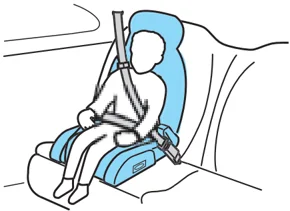
Both can be used in any vehicle in a seating position equipped with lap/shoulder belts if your child is over 40 lbs (18 kg).
The shoulder belt should cross the chest, resting snugly on the center of the shoulder. The lap belt should rest low and snug across the hips, never up high across the stomach.
If the booster seat slides on the vehicle seat, placing a rubberized mesh sold as shelf or carpet liner under the booster seat may improve this condition.
The importance of shoulder belts
Using a booster without a shoulder belt increases the risk of a child’s head hitting a hard surface in a collision. For this reason, you should never use a booster seat with a lap belt only. It is best to use a booster seat with lap/shoulder belts in the back seat- the safest place for children to ride.
! Follow all instructions provided by the manufacturer of the booster seat.
Never put the shoulder belt under a child’s arm or behind the back because it eliminates the protection for the upper part of the body and may increase the risk of injury or death in a collision.
Never use pillows, books, or towels to boost a child. They can slide around and increase the likelihood of injury or death in a collision.
137
Seating and Safety Restraints
SAFETY SEATS FOR CHILDREN
Child and infant or child safety seats
Use a safety seat that is recommended for the size and weight of the child. Carefully follow all of the manufacturer's instructions with the safety seat you put in your vehicle. If you do not install and use the safety seat properly, the child may be injured in a sudden stop or collision.
When installing a child safety seat:
- Review and follow the information presented in the Air Bag Supplemental Restraint System section in this chapter.
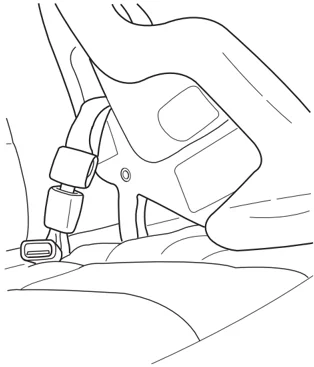
- Use the correct safety belt buckle for that seating position (the buckle closest to the direction the tongue is coming from).
- Insert the belt tongue into the proper buckle until you hear a snap and feel it latch. Make sure the tongue is securely fastened in the buckle.
- Keep the buckle release button pointing up and away from the safety seat, with the tongue between the child seat and the release button, to prevent accidental unbuckling.
- Place seat back in upright position.
- Put the safety belt in the automatic locking mode. Refer to Automatic locking mode (passenger side front seating position-Regular Cab) (passenger side front and rear seating positions-SuperCrew and SuperCab) (if equipped).
- LATCH lower anchors are recommended for use by children up to 22 kg (48 pounds) in a child restraint. Top tether anchors can be used for children up to 27 kg (60 pounds) in a child restraint, and to provide upper torso restraint for children up to 36 kg (80 pounds) using an upper torso harness and a belt-positioning booster.
138
Seating and Safety Restraints
Ford recommends the use of a child safety seat having a top tether strap. Install the child safety seat in a seating position with LATCH and tether anchors. For more information on top tether straps and anchors, refer to Attaching safety seats with tether straps in this chapter. For more information of LATCH anchors refer to Attaching safety seats with LATCH (Lower Anchors and Tethers for Children) attachments in this chapter.
!
Carefully follow all of the manufacturer's instructions included with the safety seat you put in your vehicle. If you do not install and use the safety seat properly, the child may be injured in a sudden stop or collision.
I nstalling child safety seats with combination lap and shoulder belts
!
Air bags can kill or injure a child in a child seat. NEVER place a rear-facing child seat in front of an active air bag. If you must use a forward-facing child seat in the front seat, move the seat all the way back.
!
Children 12 and under should be properly restrained in the rear seat whenever possible.
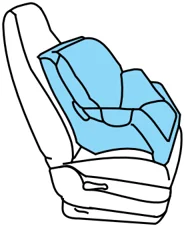
- Position the child safety seat in a seat with a combination lap and shoulder belt.

139
Seating and Safety Restraints
- Pull down on the shoulder belt and then grasp the shoulder belt and lap belt together.
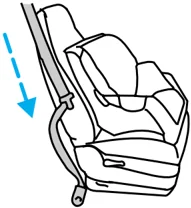
- While holding the shoulder and lap belt portions together, route the tongue through the child seat according to the child seat manufacturer's instructions. Be sure the belt webbing is not twisted.
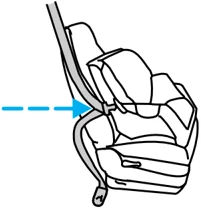
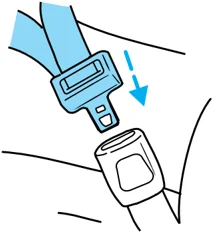
- Insert the belt tongue into the proper buckle (the buckle closest to the direction the tongue is coming from) for that seating position until you hear a snap and feel the latch engage. Make sure the tongue is latched securely by pulling on it.
140
Seating and Safety Restraints
- To put the retractor in the automatic locking mode, grasp the shoulder portion of the belt and pull downward until all of the belt is pulled out and a click is heard.
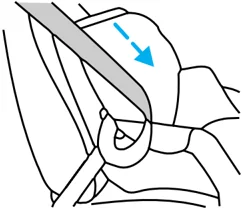
- Allow the belt to retract. The belt will click as it retracts to indicate it is in the automatic locking mode.
- Pull the lap belt portion across the child seat toward the buckle and pull up on the shoulder belt while pushing down with your knee on the child seat.
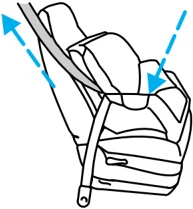
- Allow the safety belt to retract to remove any slack in the belt.
- Before placing the child in the seat, forcibly move the seat forward and back to make sure the seat is securely held in place. To check this, grab the seat at the belt path and attempt to move it side to side and forward. There should be no more than one inch of movement for proper installation.
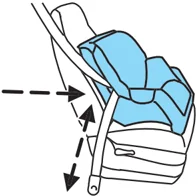
- Try to pull the belt out of the retractor to make sure the retractor is in the automatic locking mode (you should not be able to pull more belt out). If the retractor is not locked, unbuckle the belt and repeat steps two through nine.
Check to make sure the child seat is properly secured before each use.
141
Seating and Safety Restraints
Installing child safety seats in the front row lap belt seating positions
Note: Installing a child safety seat in the front row lap seating position should be avoided if at all possible. The passenger sensing system does not recognize child seats in the front center seating position.
Never place a rear-facing infant seat in the front center seating position.
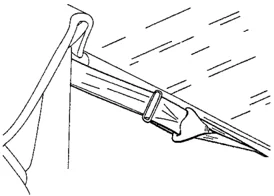
- Lengthen the lap belt. To lengthen the belt, hold the tongue so that its bottom is perpendicular to the direction of webbing while sliding the tongue up the webbing.
- Place the child safety seat in the center seating position.
- Route the tongue and webbing through the child seat according to the child seat manufacturer's instructions.
- Insert the belt tongue into the proper buckle for the center seating position until you hear a snap and feel it latch. Make sure the tongue is securely fastened to the buckle by pulling on tongue.
- Push down on the child seat while pulling on the loose end of the lap belt webbing to tighten the belt.
- If you are installing a forward facing child seat, attach and tighten any top tether strap.
- Before placing the child into the child seat, forcibly tilt the child seat from side to side and in forward direction to make sure that the seat is held securely in place. If the child seat moves excessively, repeat steps 5 through 7, try a different child safety seat, or properly install the child seat in a different position.
Attaching child safety seats with tether straps
Most new forward-facing child safety seats include a tether strap which goes over the back of the seat and hooks to an anchoring point. Tether straps are available as an accessory for many older safety seats. Contact the manufacturer of your child seat for information about ordering a tether strap.
The passenger seats of your vehicle are equipped with built-in tether strap anchors located behind the seats as described below.
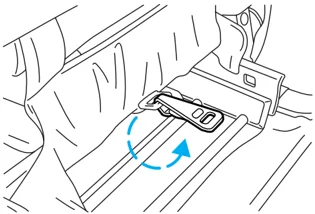
The tether anchors in your vehicle may be loops of webbing above the seatback or an anchor bracket behind the seat on the rear edge of the seat cushion.
142
Seating and Safety Restraints
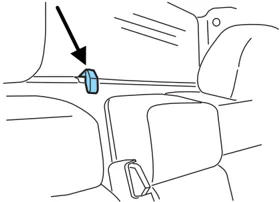
The rear seat in the SuperCab and SuperCrew has three straps along the top of the seatback that function as both routing loops for the tether straps and anchor loops.
The tether strap anchors in your vehicle are in the following positions (shown from top view):
Attach the tether strap only to the appropriate tether anchor as shown. The tether strap may not work properly if attached somewhere other than the correct tether anchor.
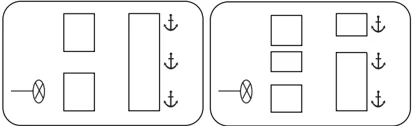
• F150 Regular Cab
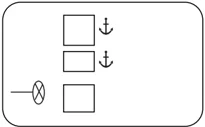
• F150 SuperCrew and SuperCab
Front seat tether strap attachment
- Position the child safety seat on the seat cushion.
- Route the child safety seat tether strap over the back of the seat and under the head restraint.
- Locate the correct anchor for the selected seating position.
- You may need to pull the seatback forward to access the tether anchors. Make sure the seatback is locked in the upright position before installing the child seat.
- Clip the tether strap to the anchor as shown.
143
Seating and Safety Restraints
• Front seat Regular Cab passenger side

• Front seat Regular Cab center (located on back panel)
! If the tether strap is clipped incorrectly, the child safety seat may not be retained properly in the event of a collision.
-
Install the child safety seat tightly using the LATCH anchors or safety belts. Follow the instructions in this chapter.
-
Tighten the child safety seat tether strap according to the manufacturer's instructions.
! If the safety seat is not anchored properly, the risk of a child being injured in a collision greatly increases.
144
Seating and Safety Restraints
Rear seat tether strap attachment
There are three loops of webbing just above the back of the rear seat (along the bottom edge of the rear window) in the SuperCab and SuperCrew. These loops are to be used as both routing loops and anchor loops for up to three child safety seat tether straps. For example, the center loop can be used as a routing loop for a child safety seat in the center rear seat and as an anchoring loop for child seats installed in the outboard rear seats.
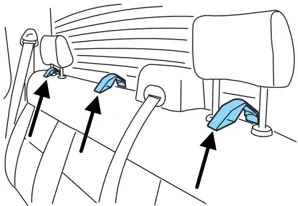
Many tether straps cannot be tightened if the tether strap is hooked to the loop directly behind the child seat. To provide a tight tether strap:
- Route the tether strap under the head restraint and through the loop directly behind the child seat.
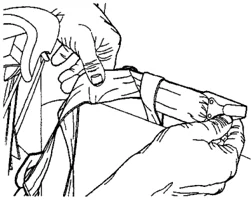
- Route the tether strap behind the head restraint supports to a loop behind an adjacent seating position, and hook the strap hook onto the loop. If using the driver's side, pass the strap behind the shoulder belt mounting for the center seat.
- Always put the tether strap through the routing loop. The head restraint support post will hold the child seat tightly, but the head restraint post is not strong enough to hold the child seat during a collision.
145
Seating and Safety Restraints
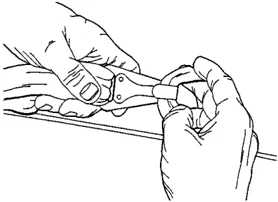
- Install the child safety seat tightly using the LATCH anchors or safety belts. Follow the instructions in this chapter.
- Tighten the tether strap according to the child seat manufacturer's instructions.
Attaching safety seats with LATCH (Lower Anchors and Tethers for Children) attachments for child seat anchors
Some child safety seats have two rigid or webbing mounted attachments that connect to two anchors at certain seating positions in your vehicle. This type of child seat eliminates the need to use seat belts to attach the child seat. For forward-facing child seats, the tether strap must also be attached to the proper tether anchor. See Attaching safety seats with tether straps in this chapter.
Your vehicle is equipped with LATCH anchors for child seat installation at the following seating positions:
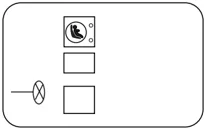
• F150 Regular Cab
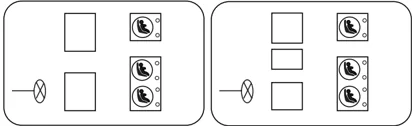
• F150 SuperCab and SuperCrew
146
Seating and Safety Restraints
Connectors on the LATCH child seat and the child seat instructions may use the symbol shown here. Your vehicle seat may have plain buttons, instead of this symbol, to indicate the location of the LATCH lower anchors.
Never attach two LATCH child safety seats to the same anchor. In a crash, one anchor may not be strong enough to hold two child safety seat attachments and may break, causing serious injury or death.
The lower anchors for child seat installation are located at the rear section of the seat between the cushion and seat back. The LATCH anchors are below the locator buttons (if provided) on the seat back.

Follow the child seat manufacturer's instructions to properly install a child seat with LATCH attachments.
Attach LATCH lower attachments of the child seat only to the anchors shown.
If you install a child seat with rigid LATCH attachments, do not tighten the tether strap enough to lift the child seat off the vehicle seat cushion when the child is seated in it. Keep the tether strap just snug without lifting the front of the child seat. Keeping the child seat just touching the vehicle seat gives the best protection in a severe crash.
Each time you use the safety seat, check that the seat is properly attached to the lower anchors and tether anchor. Try to tilt the child seat from side to side. Also try to tug the seat forward. Check to see if the anchors hold the seat in place.
If the safety seat is not anchored properly, the risk of a child being injured in a crash greatly increases.
147
Seating and Safety Restraints
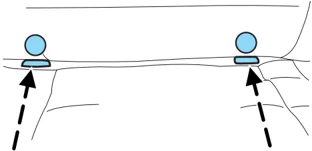
I nstalling LATCH seats (Regular Cab)
! When you install a child seat on the front passenger seat of a Regular Cab, turn the Passenger Airbag On/Off switch to OFF.
If you tightly install a LATCH infant or child safety seat with its own webbing-mounted attachments to the LATCH anchors on the front passenger seat of the Regular Cab, the front passenger sensing system may not automatically turn the airbag off. The vehicle safety belts at the right front seat include a sensor that adjusts the weight on the seat cushion. This adjustment does not work when the child seat is installed using the LATCH attachment belts instead of the vehicle safety belts. Therefore, turn the airbag OFF with the manual Airbag On/Off switch.
148